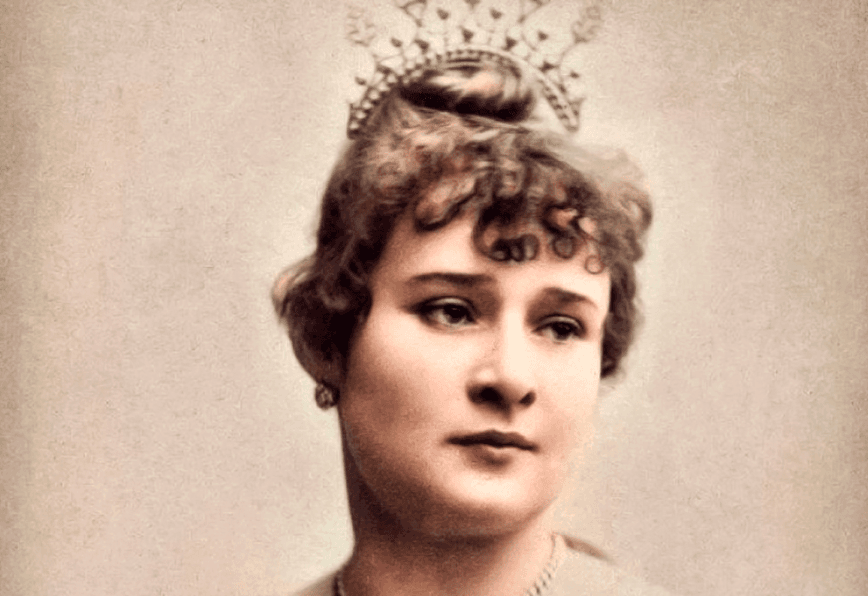
La Goulue
Louise Weber was a laundress who danced in the dance halls of the hill in the evenings. She would drain other people's glasses, which earned her the nickname La Goulue, the greedy one, and when the Moulin Rouge opened in 1889 she became its star. Toulouse-Lautrec, the painter who captured Montmartre nightlife in his posters, put her on them and made her known all over Paris.
At the height of her fame she left to strike out on her own with a fairground booth, for which Lautrec painted the panels. The crowds stayed away. She tried her hand as a lion tamer after that, lost everything, and at the end of her life she was selling cigarettes and matches at the gate of the very neighbourhood where she had once filled the hall. The panels from her booth hang in the Musée d'Orsay today.
The windmill you see in front of you is a reconstruction, because the original building burned down in 1915.
This is the end of this walk, right where you began.
If you want to carry on, the Revolution walk lies across the Seine, and from the east of the city our route about the Commune sets off, the story that already came up in the Sacré-Cœur. Enjoy the rest of Paris!
Any feedback for this story?