Musée de Cluny
At the end of the fifteenth century the abbots of Cluny built their Parisian town house here, with the little stairways and turrets you can still spot from the street. The plot they chose came with a history, because underneath lay the baths of Lutetia, the Roman city that became Paris, built around the year 200 and fed by an aqueduct that carried water from twenty kilometres away.
The frigidarium, the hall for the cold bath, still stands with its vault fourteen metres high, and it's one of the best preserved Roman spaces north of the Alps. Two buildings that have nothing to do with each other now make up a single museum.
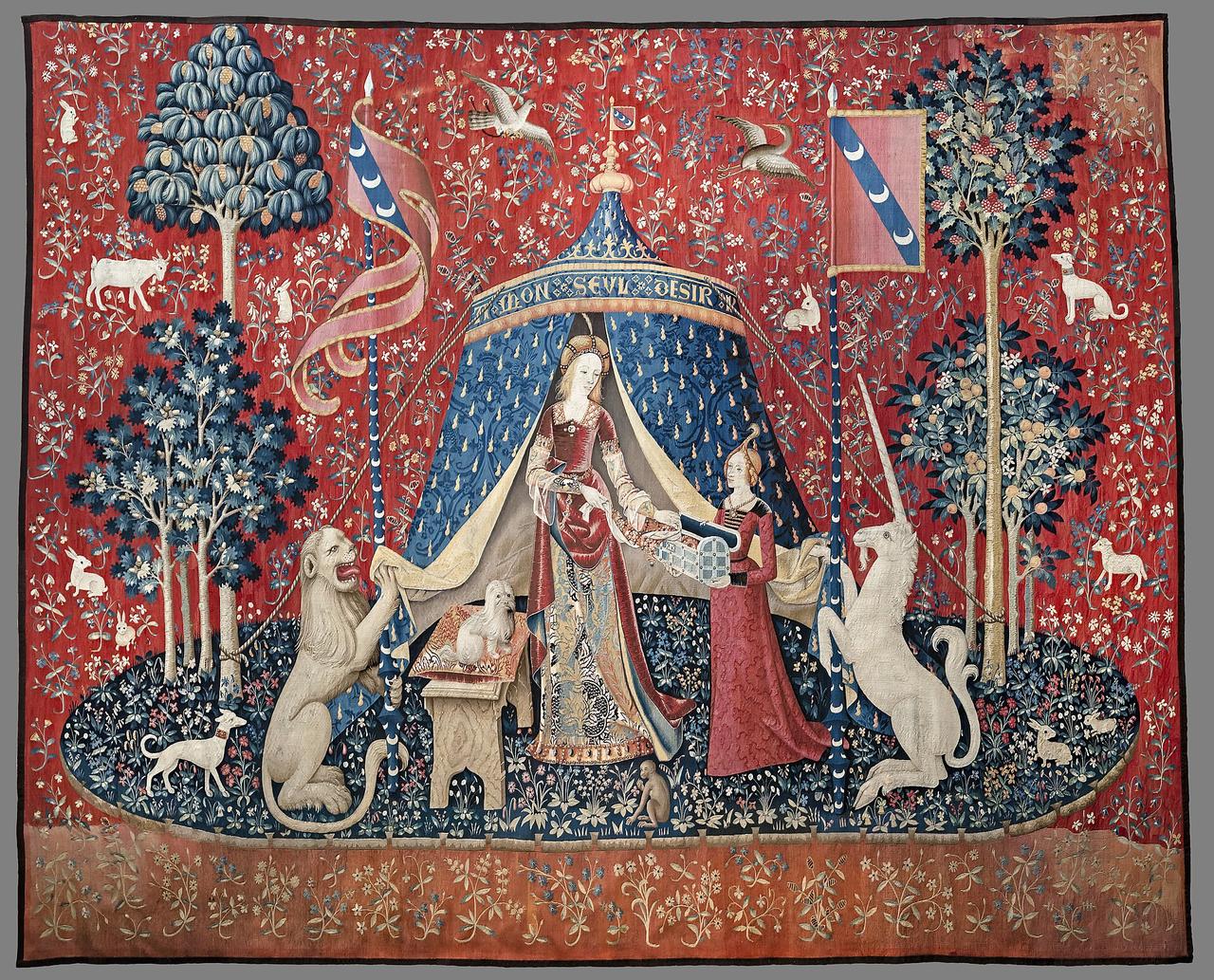
Inside hang the six tapestries of the Dame à la licorne, made around 1500 and rediscovered in a damp castle in the Creuse, where they hung against the wall slowly rotting until the writer George Sand and the heritage inspector Prosper Mérimée raised the alarm. Five of them deal with the senses, while the sixth carries an inscription that people still argue about.
Here too lie the twenty-one beheaded kings from the Notre-Dame, dug up under a bank in 1977. Their story belongs to our walk across the Île de la Cité.
From the museum we cross the boulevard towards the river, heading for the green facade across from the cathedral.
Any feedback for this story?