16 October 1943
This square carries the date in its name. On Saturday 16 October 1943, just after five in the morning, German units sealed off the neighbourhood and started ringing doorbells, house by house. Rome had been under occupation for a little over a month by then.
A few weeks earlier, the SS had extorted fifty kilos of gold from the community, promising that nothing would happen once they had it. The gold was gathered together, helped along by non-Jewish Romans who turned up with whatever they could give, and it changed nothing about what came next.
That morning 1,259 people were seized, and after screening 1,023 of them were held, two hundred of them children. They spent two days locked in a military academy near the Vatican, and on 18 October they left Tiburtina station on a freight train. Five days later they reached Auschwitz. Sixteen people came back, one of them a woman.
Many residents got away because neighbours let them in, convents opened their doors, and the hospital on the island just along the river invented an illness to hide those in hiding.
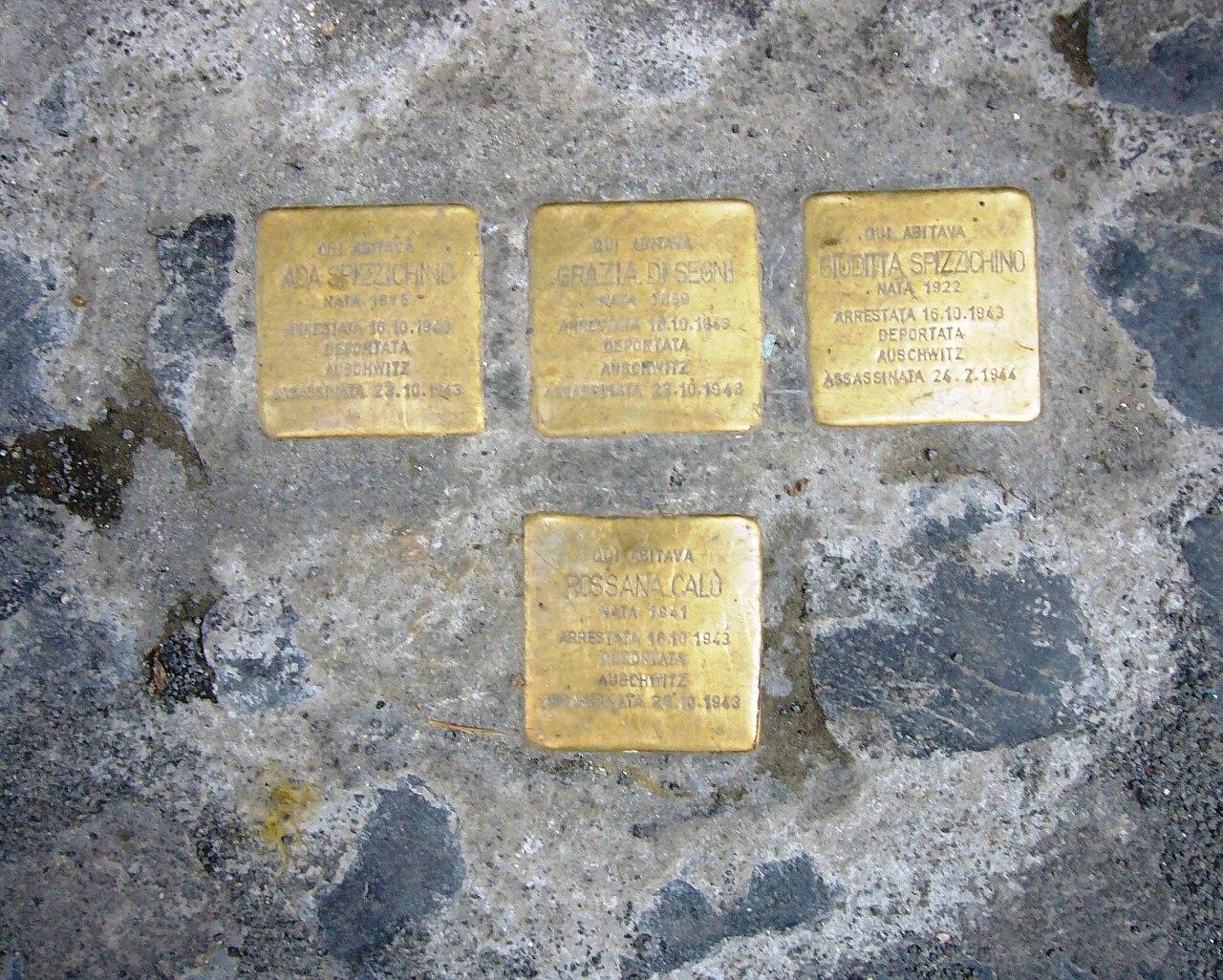
In the streets around you, brass stones sit in the pavement, each one carrying a name, a year of birth and a date. They lie in front of the houses where those people lived, and you only notice them if you look down.
We cross to the side of the ruins and head toward the large curved building at the end of the street.
Any feedback for this story?