The Hole in the Roof
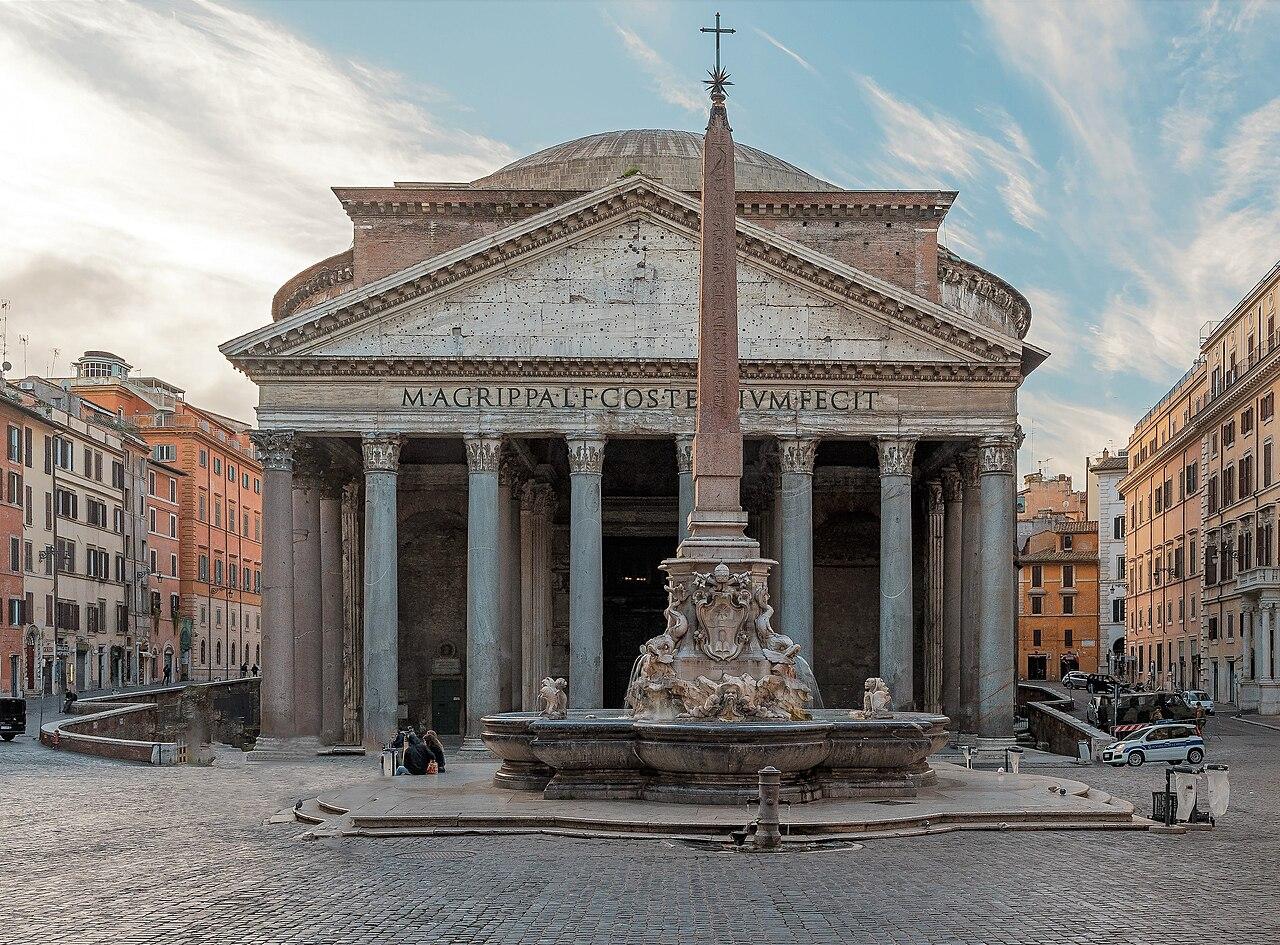
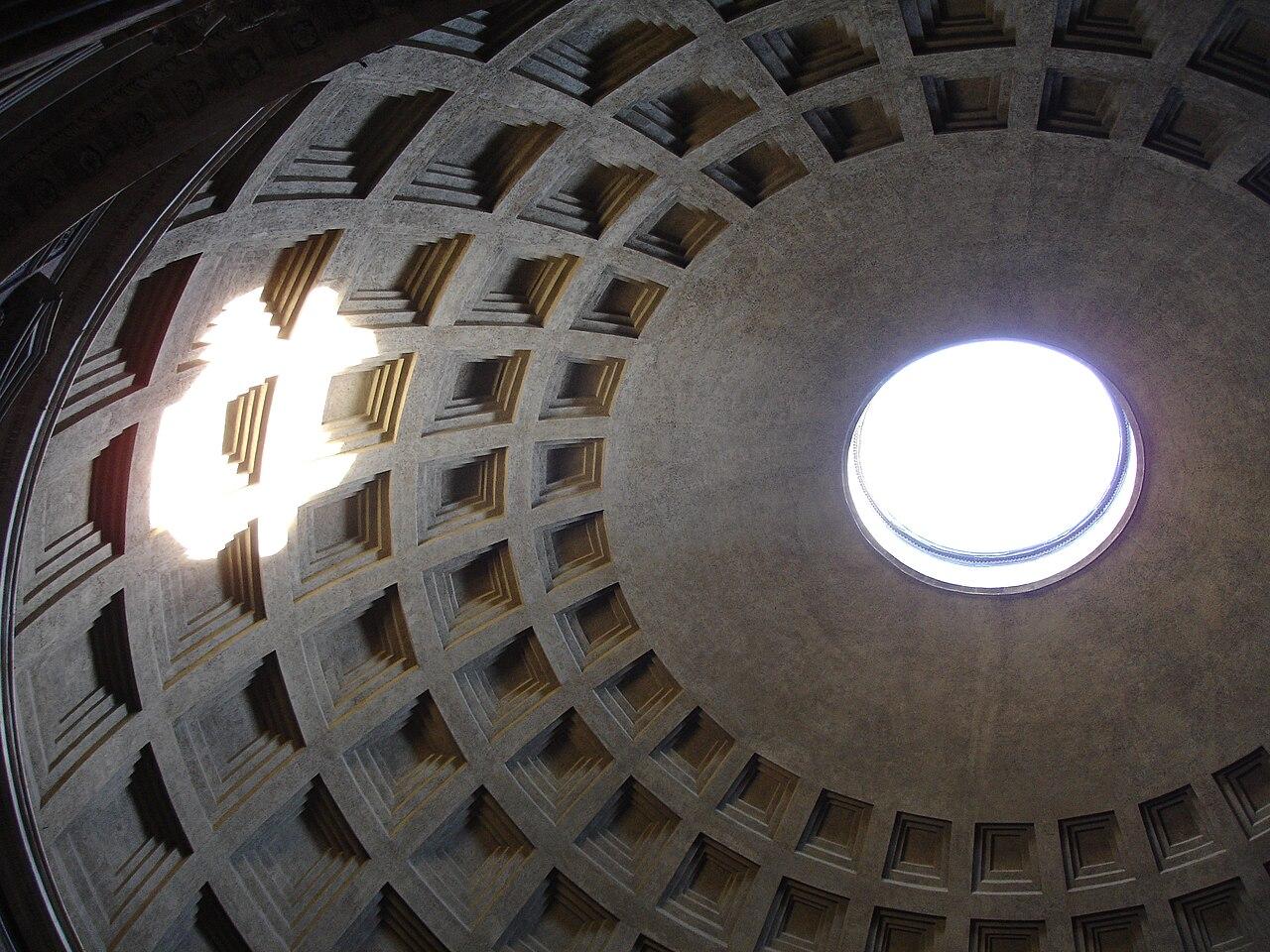
From the street the Pantheon looks like a temple front stuck onto a shapeless block, and that block is exactly why you want to go inside. Behind bronze doors that are nearly eighteen centuries old sits the largest unreinforced dome in the world, and at its centre there is a nine-metre opening that has never had a cover. So the rain comes in, caught by drainage holes that have been in the floor since the second century. On a clear day a round patch of light slides across the walls, as if someone inside were pointing at the passing of time. These days you need a ticket, and that is the price of the only ancient building in Rome that still has its roof on.
The inscription on the front names Marcus Agrippa, the general and friend of the first emperor Augustus, as the builder. He did put something up here, and after it burned down the emperor Hadrian raised this version almost a century and a half later, keeping the old name on the front.
The reason it still stands is that in the year 609 it became a church, and churches were rarely torn down. In the seventeenth century, though, Pope Urban VIII had the bronze stripped from the porch to make cannons. His family name was Barberini, and the Romans turned it into a line: what the barbarians left standing, the Barberini carried off.
To the left of the centre lies the tomb of Raphael, the Renaissance painter.
We leave the square along the left side of the Pantheon on Via Giustiniani, keeping left until a narrow passage brings us out onto a long, stretched-out square.
Any feedback for this story?