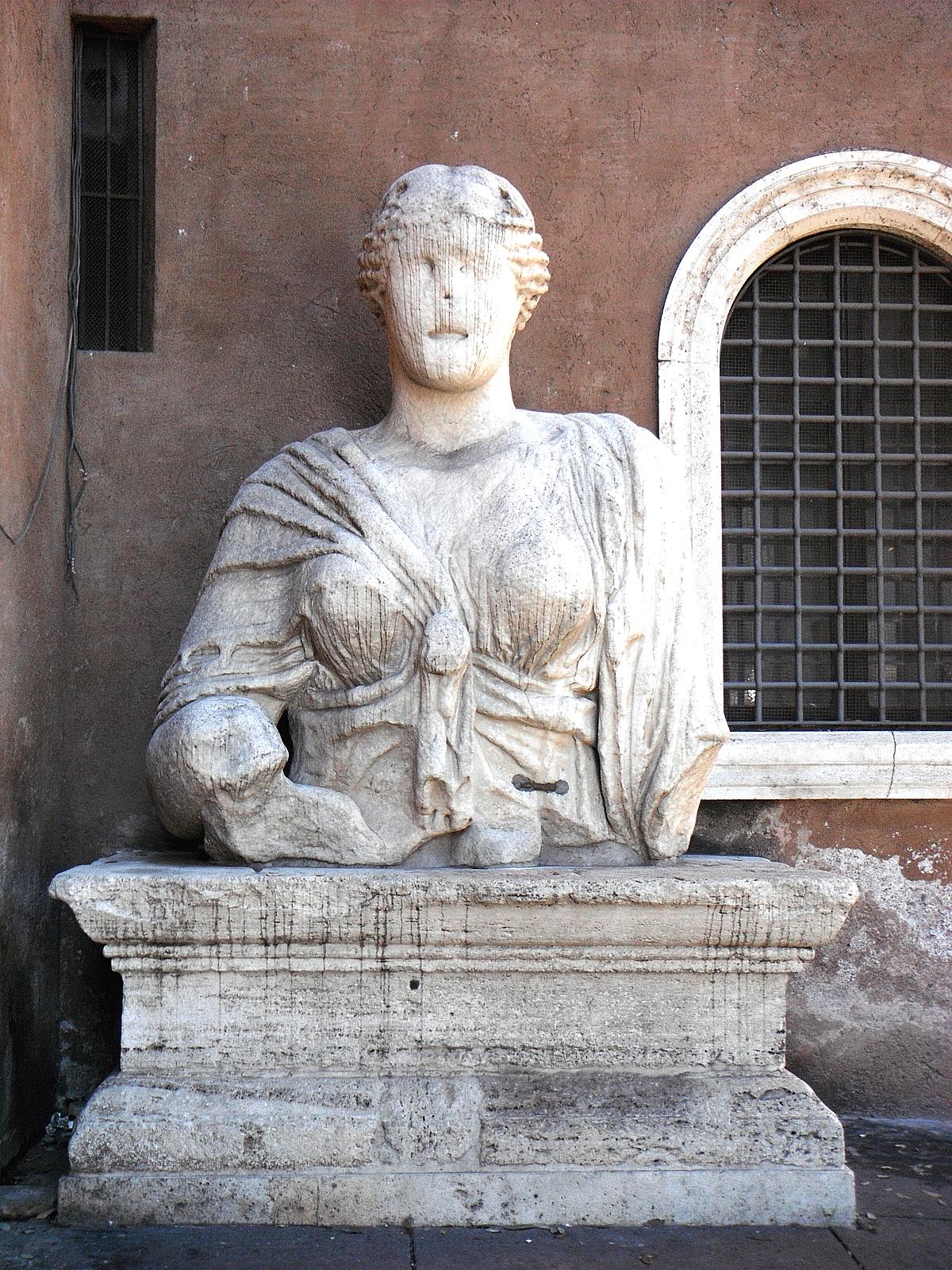
The Woman of Stone
Against the side wall of this building stands a colossal bust of a woman without arms, almost three metres tall, and she was the only female voice in the company.
The statue probably represents the Egyptian goddess Isis, or a priestess of her cult, and it comes from the sanctuary that stood a few streets away. That is the same complex the marble foot came from, the one you meet on the walk among the icons of Rome.
The name Madama Lucrezia refers to Lucrezia d'Alagno, mistress of King Alfonso of Naples, who came to live in this neighbourhood after his death and is said to have owned the statue.
Her texts often dealt with daily life, with prices and shortages, and during the uprising of 1799 a little sign hung around her neck announcing that she had had enough.
She is still there, right beside one of the busiest crossings in the city, and almost everyone walks straight past her.
We cross the square towards the northwest and follow Via del Plebiscito and Via del Gesù to the church with the tall Baroque façade.
Any feedback for this story?