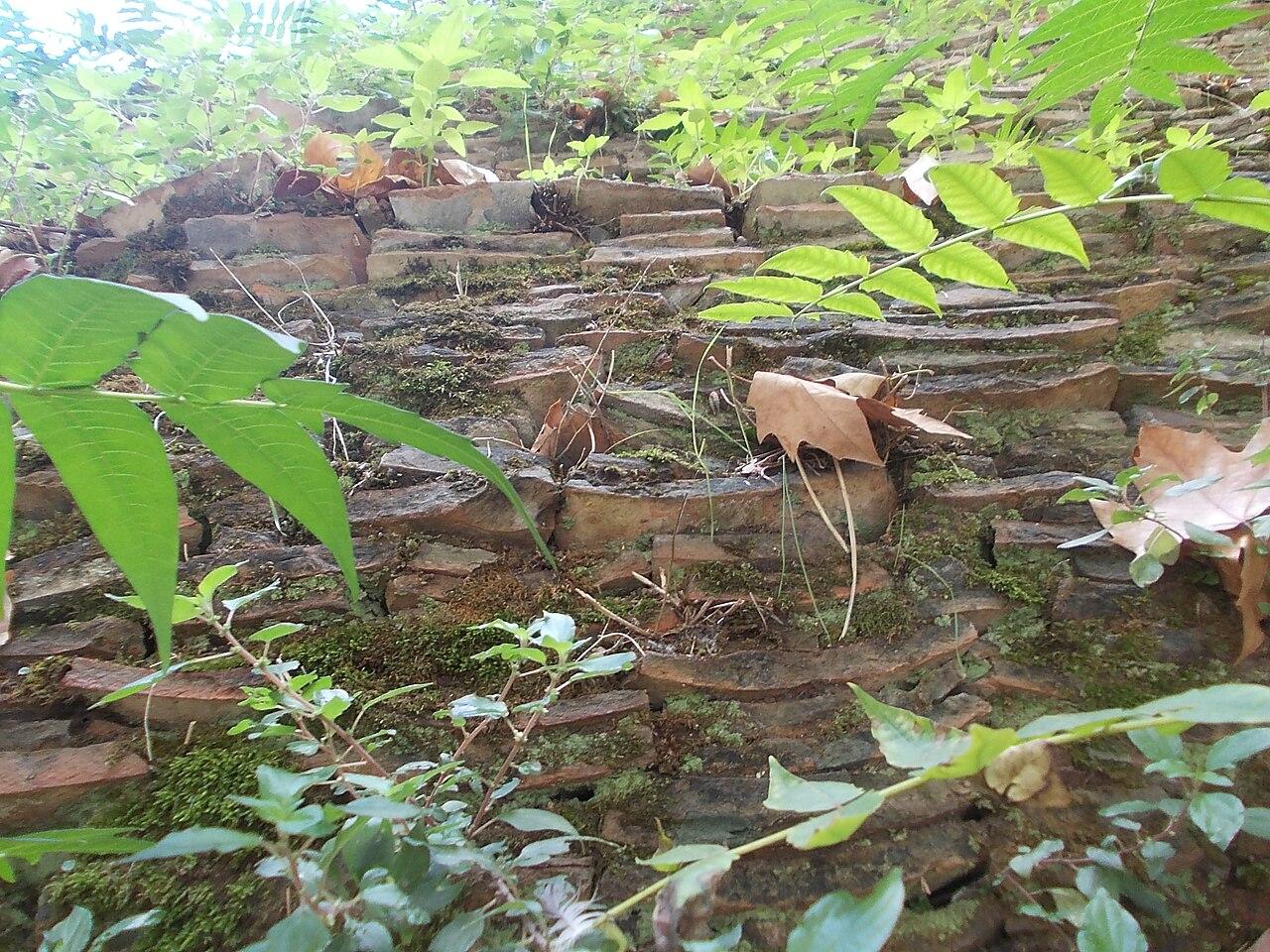
The hill of broken shards
This hill, thirty-five metres high, was made entirely by people, and it consists of nothing but broken pots.
Rome ate and cooked with olive oil, which arrived by ship from Spain and North Africa in earthenware amphorae, each holding around seventy litres. An amphora that had held oil was hard to reuse, because the oil soaked into the clay and turned rancid. So they were emptied in the harbour next door and thrown away.
It was all done in an orderly way. The shards were stacked into terraces, with low walls between them to stop the whole thing from slumping, and lime was scattered over the layers to keep down the smell. That is how the hill grew between the first and third centuries to a circumference of almost a kilometre.
Archaeologists put the number of amphorae at around fifty-three million. Many of them carry stamps with the name of the producer, the harbour and the year, which makes this rubbish dump one of the best sources we have on the economy of the empire.
In the Middle Ages the hill was used for passion plays, dramas about the suffering of Christ staged by the city itself, with the slope as a backdrop and the audience on the flanks. Later on wine merchants cut cellars into it, because the loose shards keep the temperature constant, and those cellars are still there behind the doors along the foot of the hill.
The site is fenced off and you can only visit by appointment, but from the street you can see the shards lying in the bare patches.
We follow Via Galvani north, past the old slaughterhouses, and carry on to the street that climbs the hill.
Any feedback for this story?