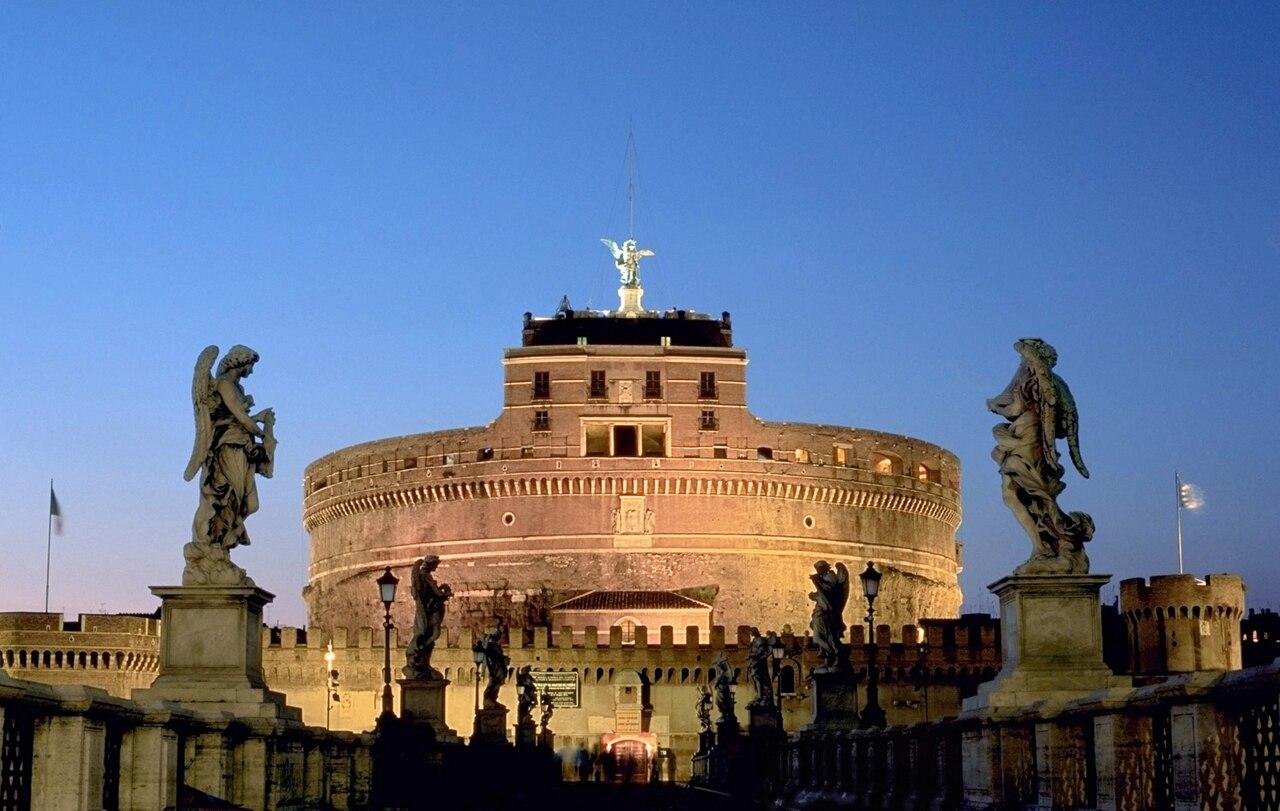
The castle and the executioner
This round castle was in turn an imperial tomb, a fortress, a papal refuge and a prison, and it's that last role that brings it into this story.
Giacomo and Bernardo Cenci were locked up here, along with countless others who had displeased the pope. Giordano Bruno, the philosopher who would later be burned at the stake on Campo de' Fiori, spent years inside before he was taken to the square, and the sculptor Benvenuto Cellini was held here too, even escaping once using a rope of torn bedsheets.
In Rome the job of executioner was an office with a name of its own. The most famous was Giovanni Battista Bugatti, whom the Romans called Mastro Titta, and who carried out more than five hundred executions between 1796 and 1864. He lived in Borgo on the other side of the river and was only allowed to cross when he had work to do, which is how the Roman dialect came to use the phrase that Mastro Titta is crossing the bridge as a warning that someone was about to die. He kept a record of his work in a little book, wore a red cloak, and his equipment still sits in a small museum in the city.
The death penalty only disappeared in the Papal States when the state itself came to an end, in 1870.
Thanks for coming along on this walk. There are more routes through Rome to discover: the ghetto with the story of 16 October 1943, the talking statues where Romans stuck their anonymous mockery, and the Aventine with its hill of broken pottery and its keyhole.
From this square you can reach Piazza Navona in ten minutes on foot, and buses leave in both directions along the riverside.
Any feedback for this story?