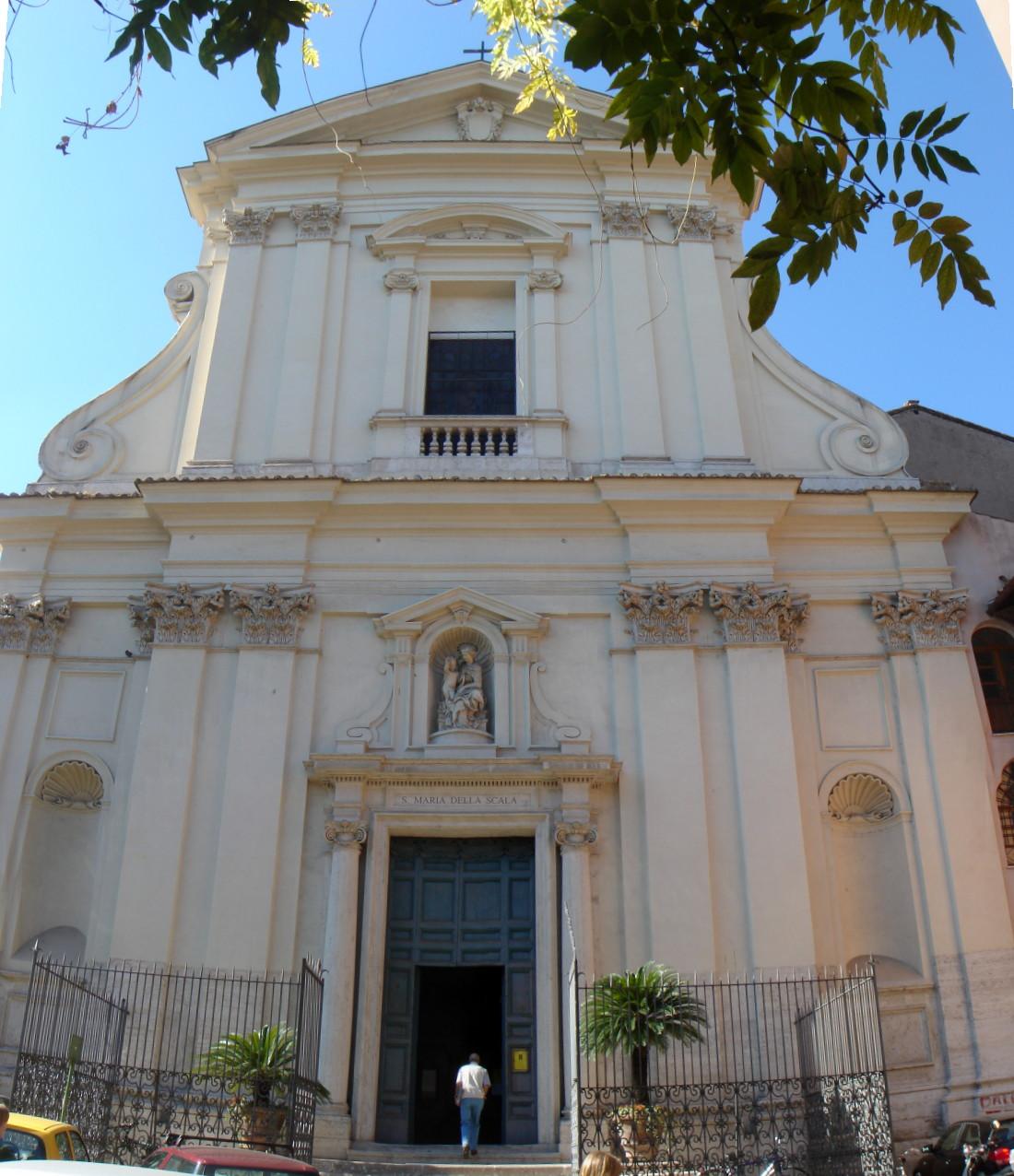
The Rejected Caravaggio
On the right of the nave hangs an altarpiece that ended up here because another canvas was turned away, and that rejected canvas now hangs in the Louvre in Paris.
Around 1601, the Carmelites of this church asked Caravaggio to paint a Death of the Virgin. He gave her a swollen body and bare feet, reportedly modelled on a woman pulled from the Tiber, and the order found that impossible to reconcile with the mother of Christ. Rubens saw the painting, advised the Duke of Mantua to buy it, and so it left the city. Ever since, a work by one of Caravaggio's contemporaries has filled the place it was made for.
Above the sacristy you'll find the second curiosity: the Carmelite pharmacy, so renowned in the seventeenth century that it supplied the papal household. The original cabinets, jars and scales are still in place, with drawers full of dried herbs and bottles whose labels remain readable, and the whole thing counts as one of the best preserved old pharmacies in Europe. You can visit by appointment through the church.
Even with the door upstairs shut, it's almost always quiet down here, which is a rarity in this neighbourhood.
We follow Via della Scala south, past the gate, and come out onto the large square with the fountain and the church with the mosaic facade.
Any feedback for this story?