The gold and the Egyptian heads
Inside, the whole apse glows with gold, and high up Christ and Mary sit side by side on a single throne, something that was new in the twelfth century and that you won't find anywhere in older churches.
Below runs a row of smaller scenes from the life of Mary, made by Pietro Cavallini at the end of the thirteenth century. He worked a generation before Giotto and counts as one of the first to give figures weight and space instead of pressing them flat against a golden background.
The twenty-two granite columns in the nave come from ancient buildings, probably from the Baths of Caracalla. On a few of the capitals you can make out the heads of Isis, Serapis and Harpocrates, Egyptian gods who have kept watch here for centuries inside a Christian church, though some of the faces were later chipped away.
To the left of the altar, the floor marks the spot where, as the story goes, a spring of oil once welled up, with the words fons olei. It's a place where people still pause for a moment.
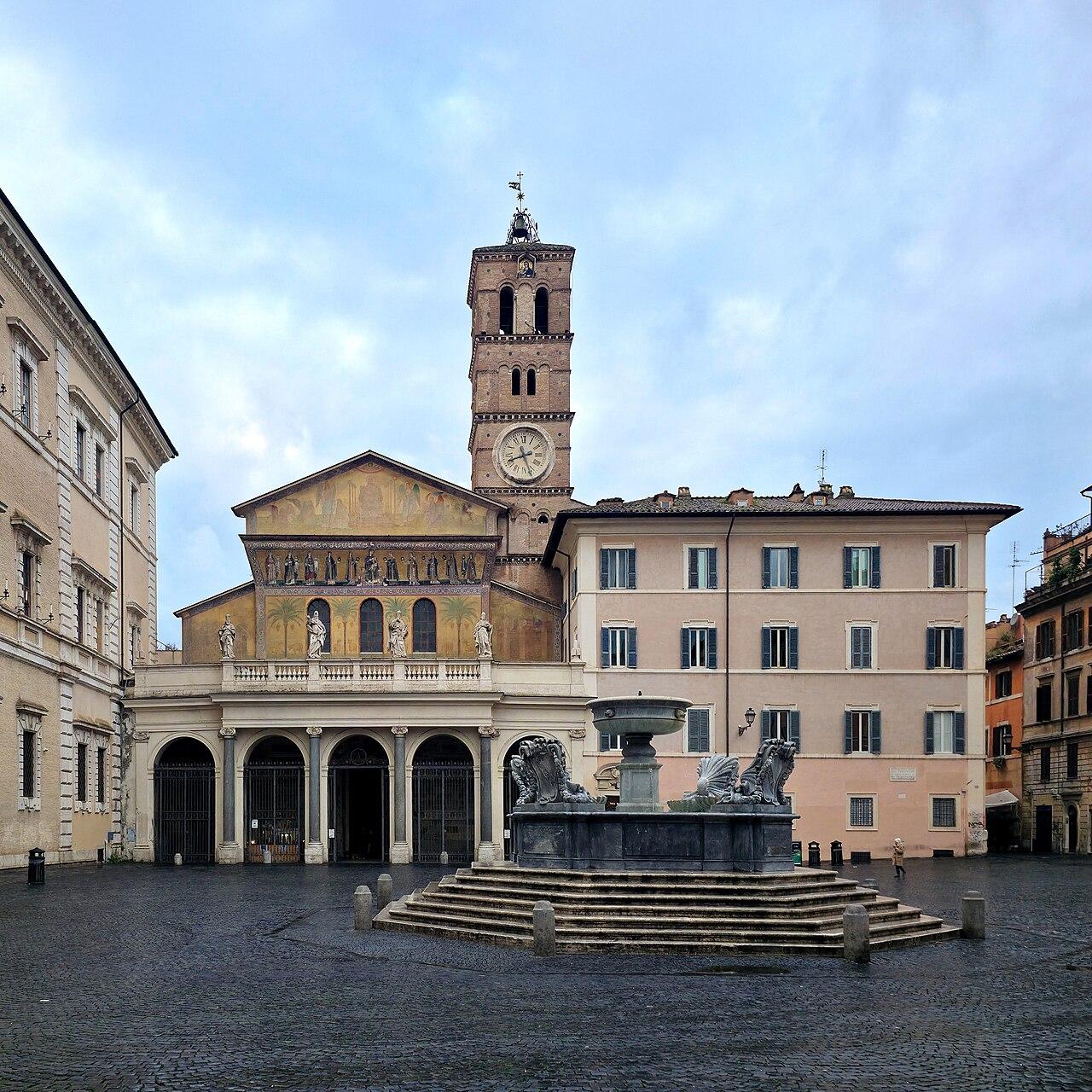
We leave the church and walk towards the fountain in the middle of the square.
Any feedback for this story?