The disc in the floor
Halfway down the nave there's a disc of yellow marble set into the floor, no bigger than a dinner plate, and it's the only spot in the church where the dome above you snaps into place.
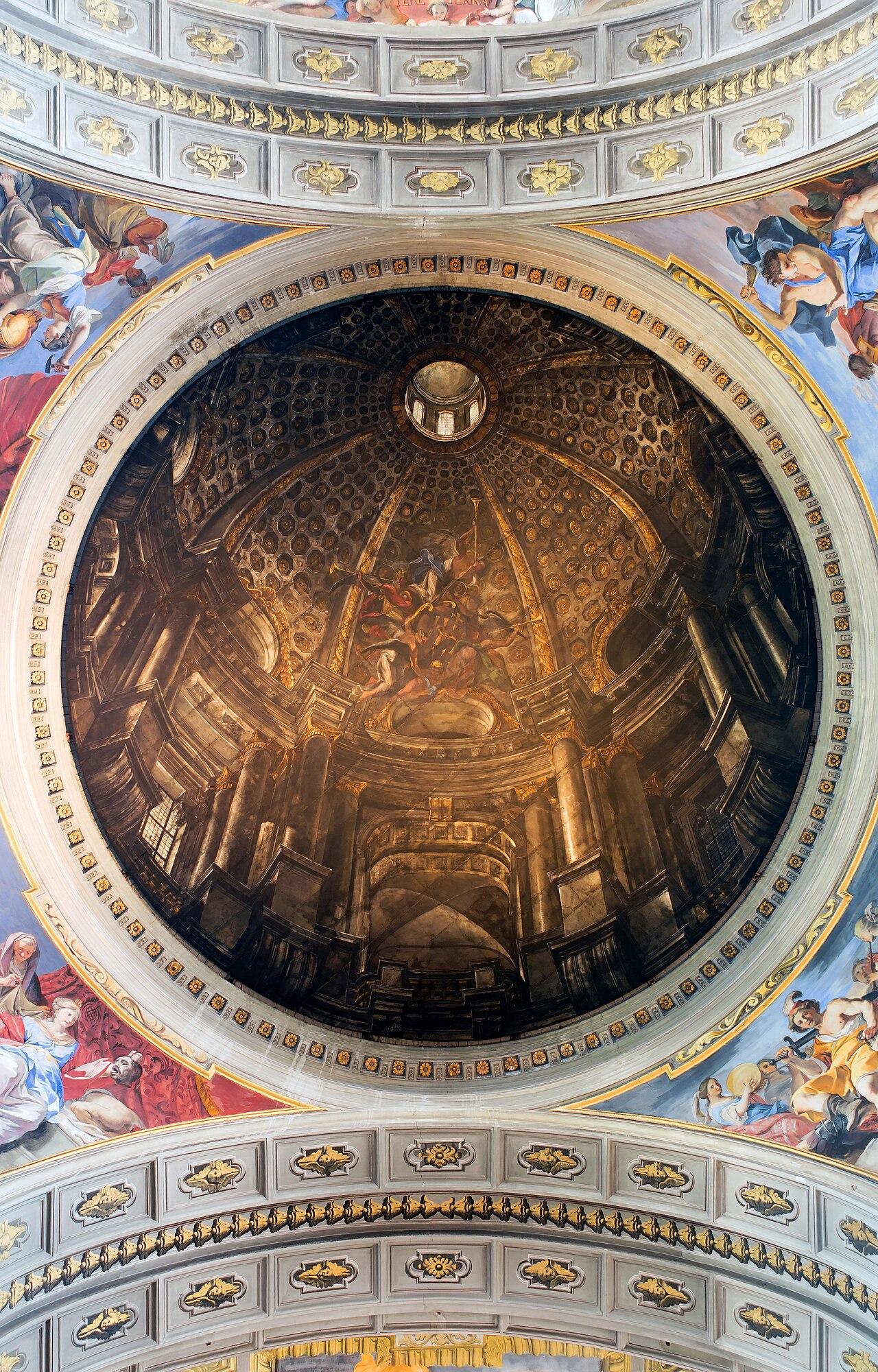
Stand there and you see ribs climbing upward, windows in the drum and a lantern with light behind it, when in reality what hangs above you is a flat canvas seventeen metres across. Andrea Pozzo painted it at the end of the seventeenth century, because the money for a real dome had run out and the neighbours were complaining that one would block their light.
A few steps to the side and the whole thing falls apart: the ribs tilt, the windows slide crooked and the entire structure collapses back into paint on a flat surface, and it's exactly this walking back and forth that makes the church worth your time.
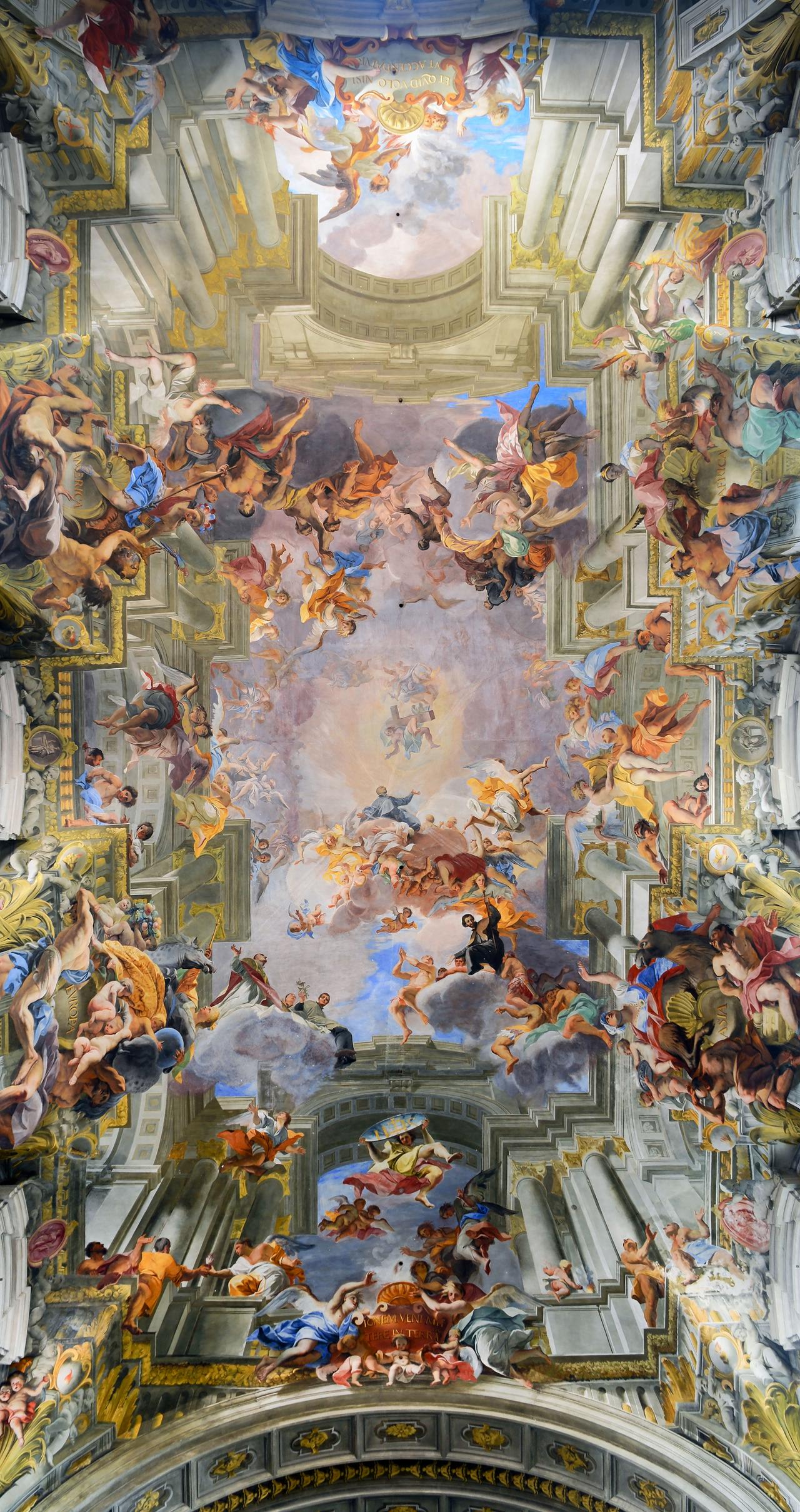
Further along the nave there's a second disc, this one for the ceiling fresco, where saints, clouds and columns flow into one another so smoothly that the roof seems to stand open. That works from precisely one point too, and when you look at it from the side you watch the whole heaven tilt.
Pozzo was a Jesuit himself and painted this for his own order, which paid him with board and lodging.
We leave the church by Via del Seminario, the street directly opposite the church steps, and keep going until we're standing at the side of a building you've already seen a hundred times in photos.
Any feedback for this story?