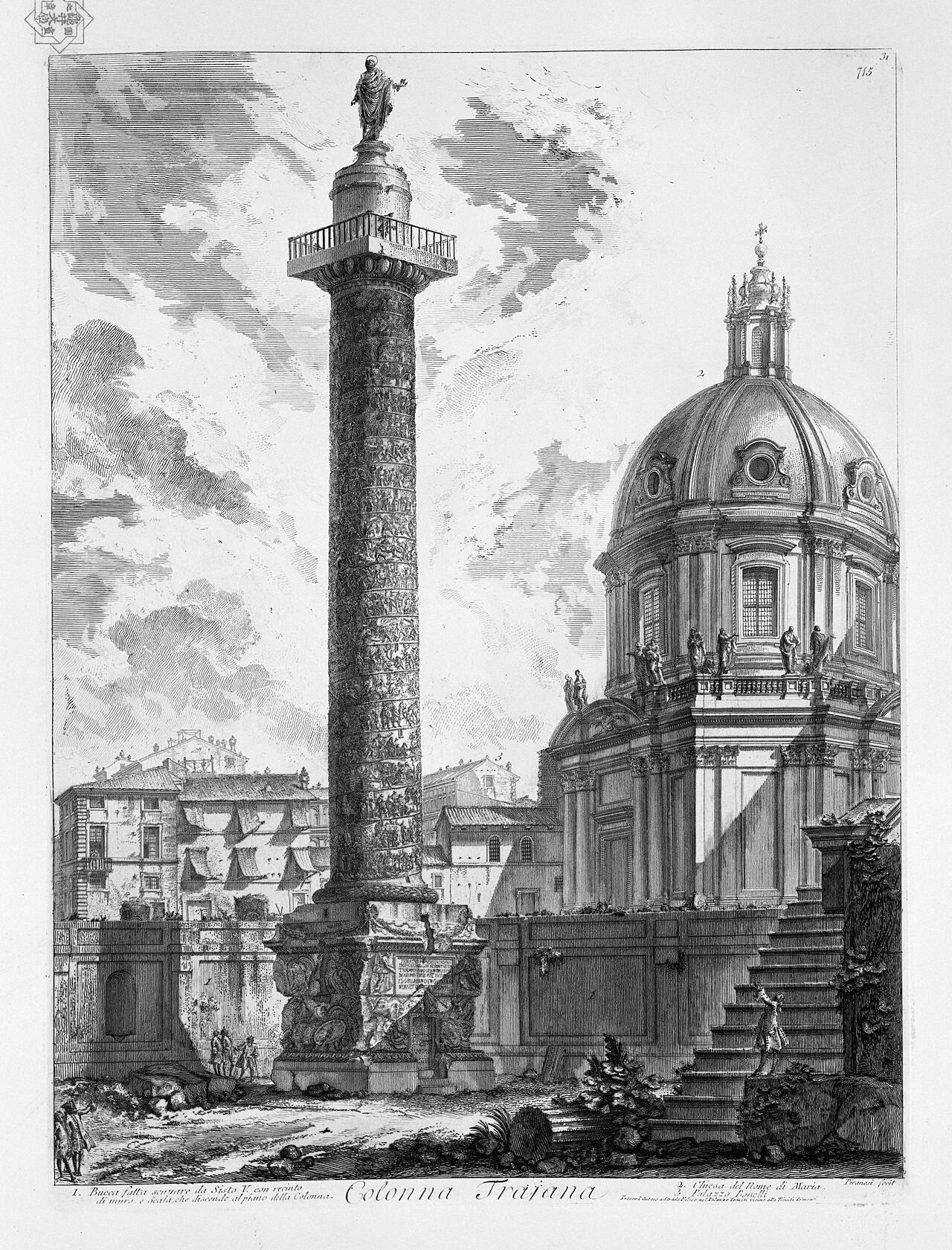
The comic strip nobody could read
This thirty-metre column carries a relief that spirals upward like a ribbon, and if you unrolled it, it would stretch two hundred metres. It holds a hundred and fifty-five scenes with more than two thousand figures, telling the story of the two campaigns with which the emperor Trajan conquered the kingdom of Dacia, roughly present-day Romania, around the year 105.
It is at once the most famous and the least visible monument in Rome. Above the first few windings, everything becomes illegible if you are standing at street level. The Romans had a solution for that. On either side stood two libraries with terraces at different heights, from which you could keep following the story as it climbed. Those buildings are gone, so the tale now trails off halfway up.
That makes the lower windings the ones worth studying. Here you see soldiers throwing a bridge across the Danube, villages going up in flames and prisoners being led away, all at eye level.
Inside the base once stood a golden urn holding the ashes of Trajan himself, the only emperor allowed to be buried within the city walls. His statue stood on top until Pope Sixtus V replaced it with Saint Peter in 1588.
There is one more message in all that height. The inscription on the base says the column shows how tall the ridge was that was dug away on this spot to make room for the forum. Thirty metres of rock, moved by hand.
We cross the wide street towards the side of the imperial fora and head in the direction of the Colosseum.
Any feedback for this story?