The walls that took the river away
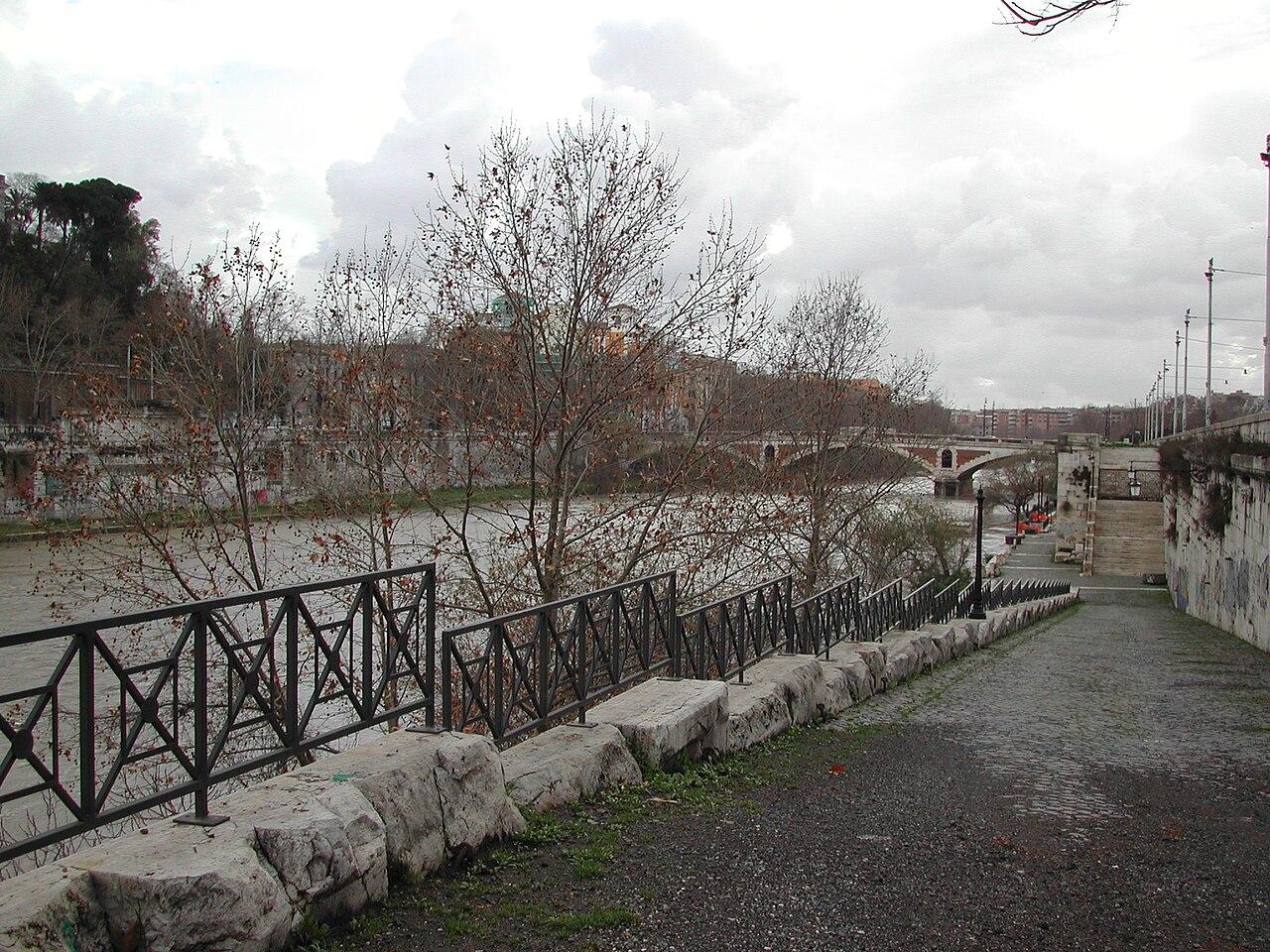
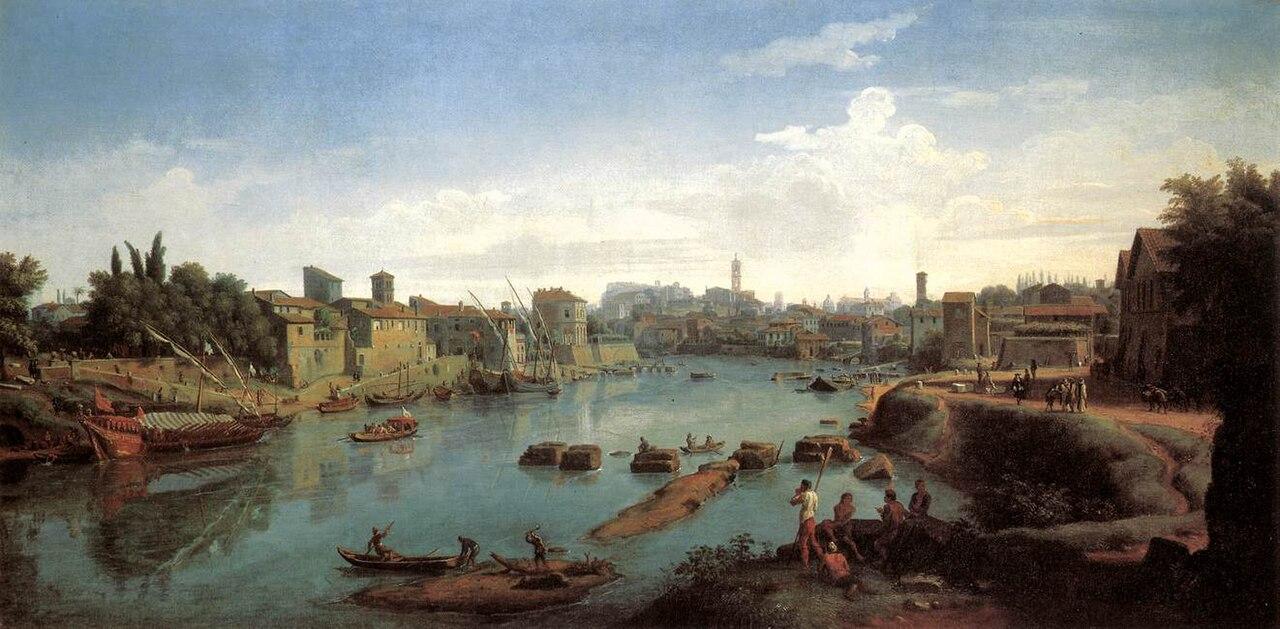
These tall embankment walls are younger than almost everything you've seen today. Right up into the nineteenth century, Trastevere ran down to the water with steps, landing stages and warehouses, and the Tiber was a working place: boats unloaded timber, wine and grain, mills floated on the current, and fishermen sold their catch at the quay.
In December 1870 the river rose so high that half the neighbourhoods stood under water. The young Italian state soon settled on a drastic fix, and from 1876 it built these walls of twenty metres with a straight channel running between them.
It worked, because Rome hasn't had a major flood since. The price was the riverbank itself: the harbour of Ripa Grande disappeared, the mills went away, and the city lost touch with its river. The plane trees along the quay were planted on top of it all later.
The harbour that vanished here had an ancient predecessor further downstream, where the shards of olive oil jars make up a whole hill, and that one lies on the walk across the Aventine. The same river, by tradition, carried the basket with Romulus and Remus ashore downstream at the foot of the Palatine, and that story carries the walk about the twins.
This is the end of this walk.
From here we keep to the quay until the Ponte Sisto comes into view, carry on by the water to the steps, and there you are back on Piazza Trilussa, where the fountain stands that had to move from its old spot during those same works.
Any feedback for this story?