The Allied bombing
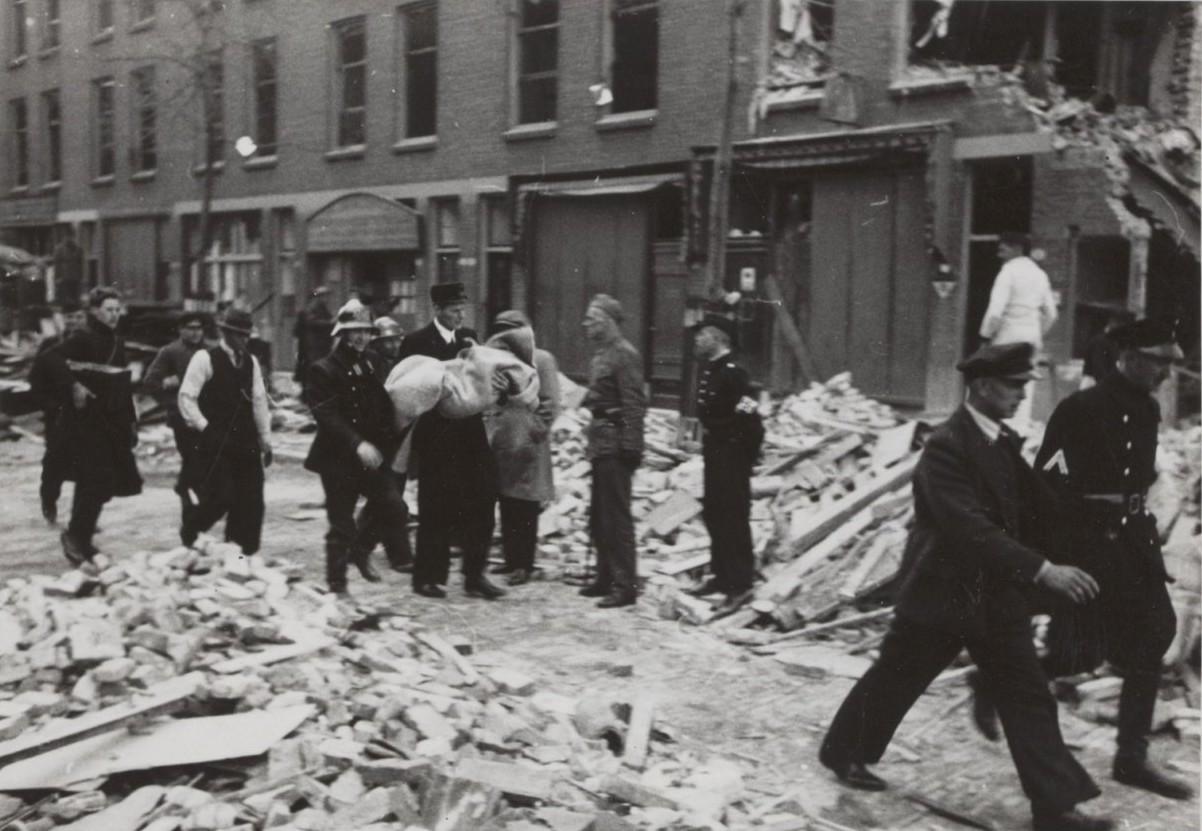
You're standing in Bospolder-Tussendijken, by Park 1943. Scattered across the grass lie Corten steel numbers, as if they've just slammed into the ground, and together they spell out a date: 31 March 1943.
That Wednesday afternoon, a hundred and two American bombers of the Eighth Air Force came over the city. Their target lay in Rotterdam-West and at the Wilton-Fijenoord shipyard in Schiedam, where work was being done for the German navy. A mistake in the approach route and a strong wind brought the bombs down just a little further along, right in the middle of this crowded working-class neighbourhood. More than four hundred people were killed, as many were wounded, and around thirteen thousand residents found themselves out on the street. The exact death toll is unknown to this day, partly because people were hiding here who appeared in no population register at all.
It was the heaviest bombing the city had suffered since May 1940, and yet for decades no one talked about it. School lessons skipped over it, the commemorations barely mentioned it, and so it earned the name it still carries today: the forgotten bombing. Only in 1993, fifty years on, did Prime Minister Ruud Lubbers unveil the monument here by the artist Mathieu Ficheroux.
Across the whole war, the Allies carried out more than a hundred and twenty attacks on Rotterdam, killing nearly nine hundred of the city's people in all.
Any feedback for this story?