De Westersingel
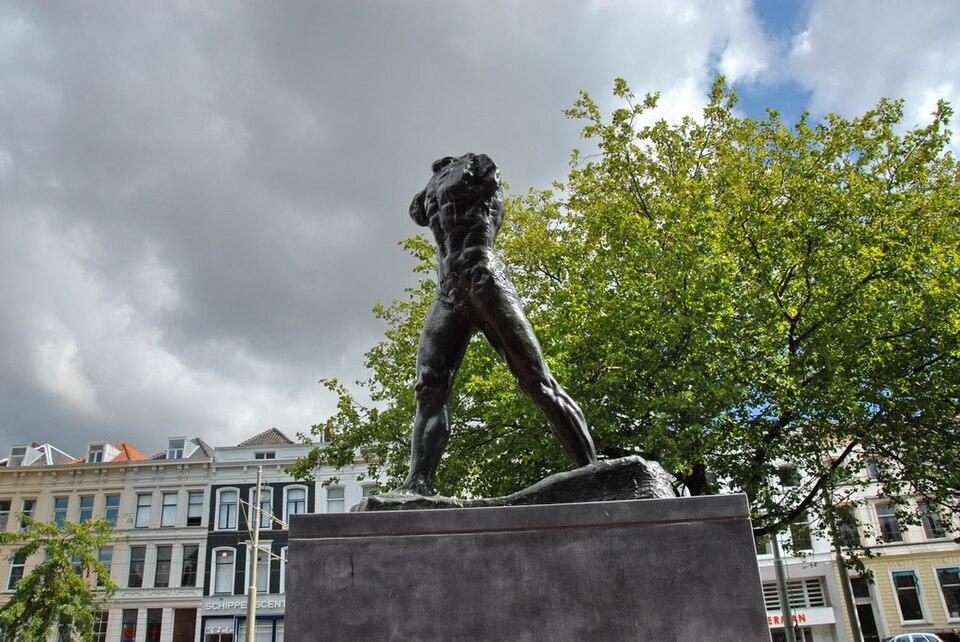
The man walking here has no head and no arms, and yet you can tell exactly where he is going. Rodin made this striding figure around 1900, and since 1999 he has stood on the Westersingel as part of the sculpture route that runs the full length of the water, with work by Umberto Mastroianni and Joel Shapiro among others.
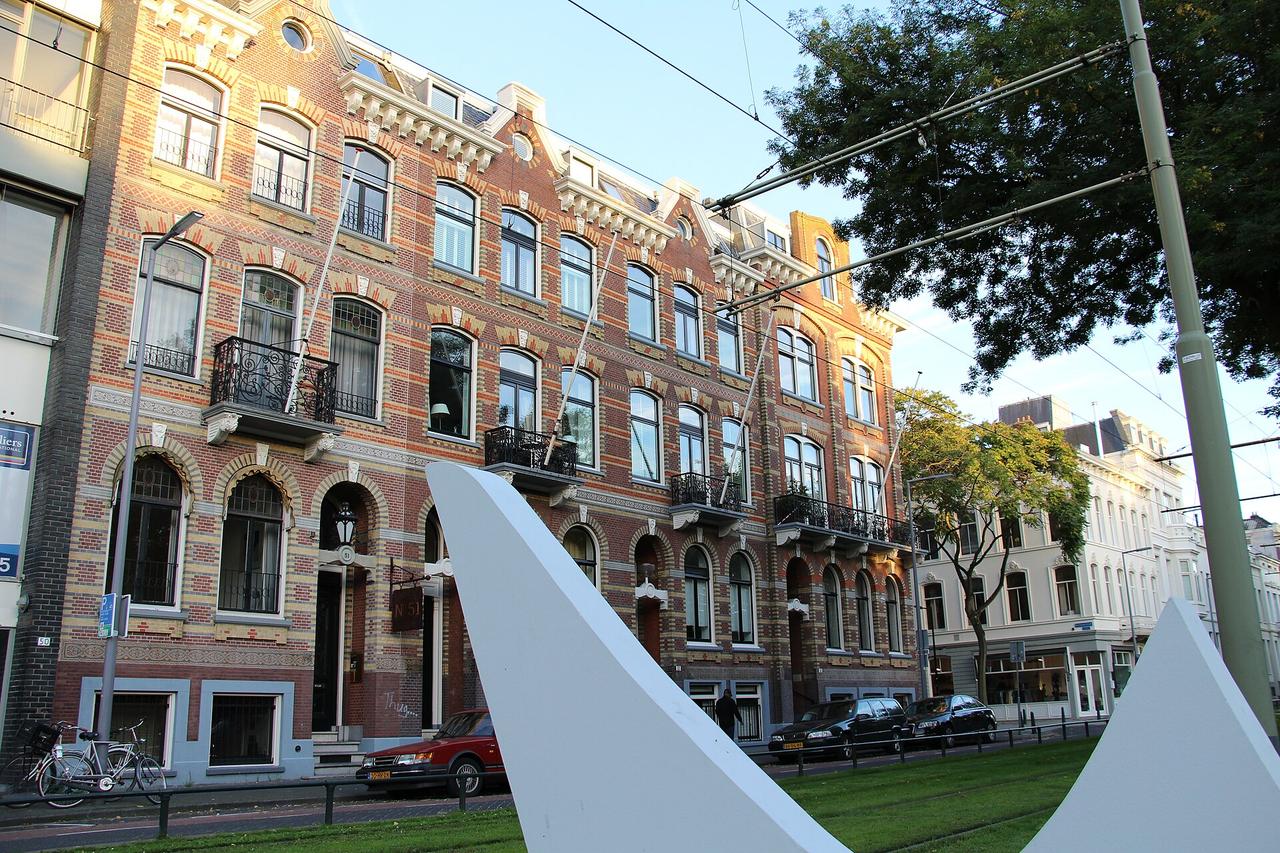
This canal comes from a completely different city than everything you have walked through today. Jan David Zocher, a landscape architect, designed it around 1860 as a green walking quay for the well-to-do, with winding paths and views over the water, and the fire of May 1940 reached this point and went no further. So you are now walking past trees that are older than the city behind them.
This is the end of the walk. Rotterdam Centraal, the city's main train station, is about six minutes away, straight ahead along the water with the Kruisplein side on your right.
If you want to know what happened in those fourteen minutes of May 1940, our walk The Bombing of Rotterdam tells that story from the Markthal, past the church that remained standing and the line in the road surface you cross close to here. And if you would rather see how nature has made this city its own, there is the urban nature route we created together with Het Natuurhistorisch, the city's natural history museum.
Enjoy the rest of your time in the city that reinvented itself!
Any feedback for this story?