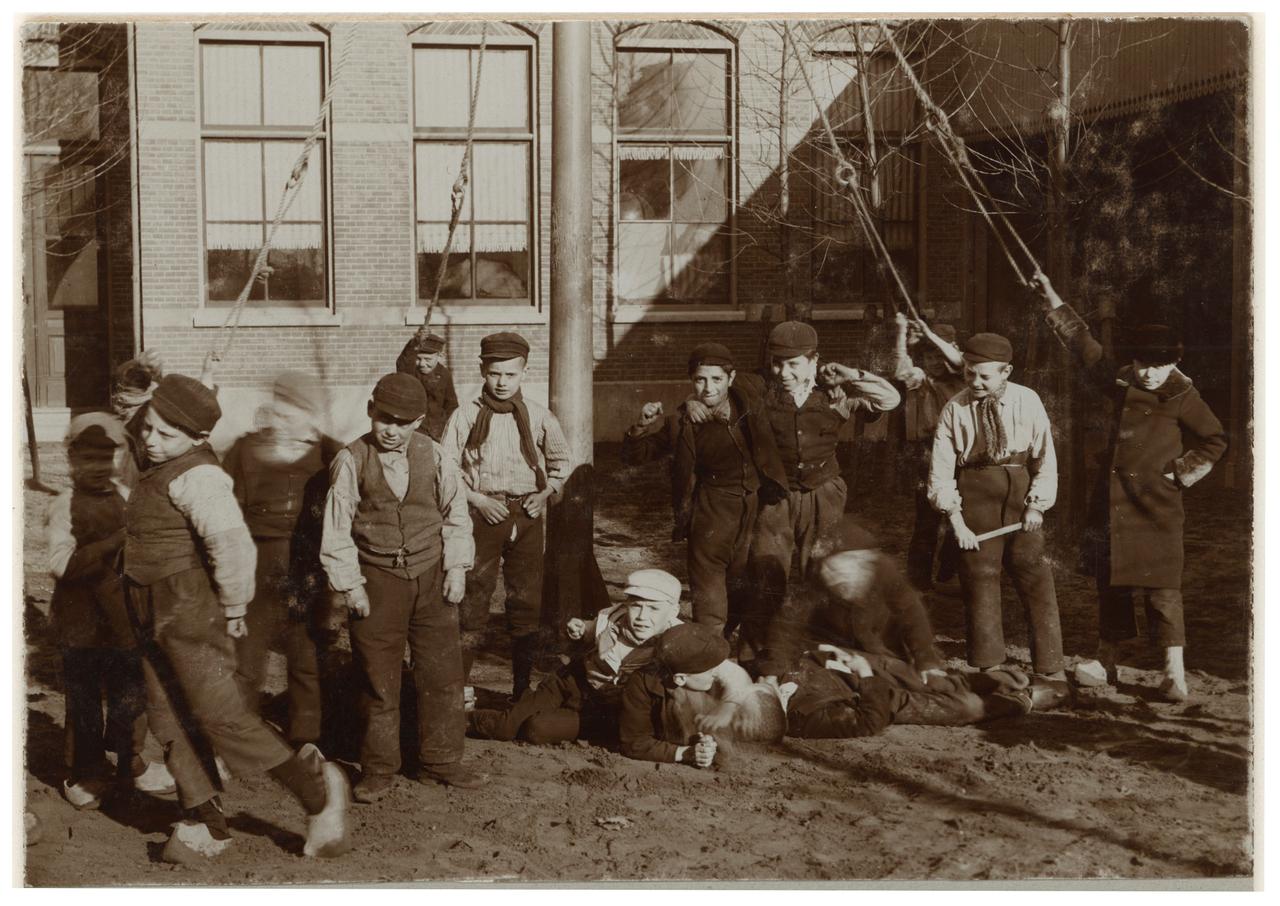
The Ragged School
In 1853, two women walking along the Boompjes saw what everyone in Rotterdam saw and no one did anything about. The city was growing fast, and in the alleys around the Schiedamsedijk barefoot children roamed, begging and fighting over scraps of food.
Pietronella Kruijff and Catharina Suermond rented a room in the Ketelaarsgang for a guilder a week. On Mondays, Wednesdays and Fridays, between ten and twelve, a handful of children could come, and an evangelist taught them with no blackboard and no books. The school welcomed every child, whatever their faith, and when it officially opened a hundred and thirty of them were singing.
Alongside reading and writing, the children were cared for. Volunteers washed them, benefactors brought clothes and shoes, girls learned to sew and knit, and boys were trained as tailors or cobblers. By 1903 there were three hundred and fifty pupils and a waiting list.
After the Second World War the numbers fell, because the poverty that had created the school had largely vanished from the city, and in 1963 it closed its doors.
Any feedback for this story?