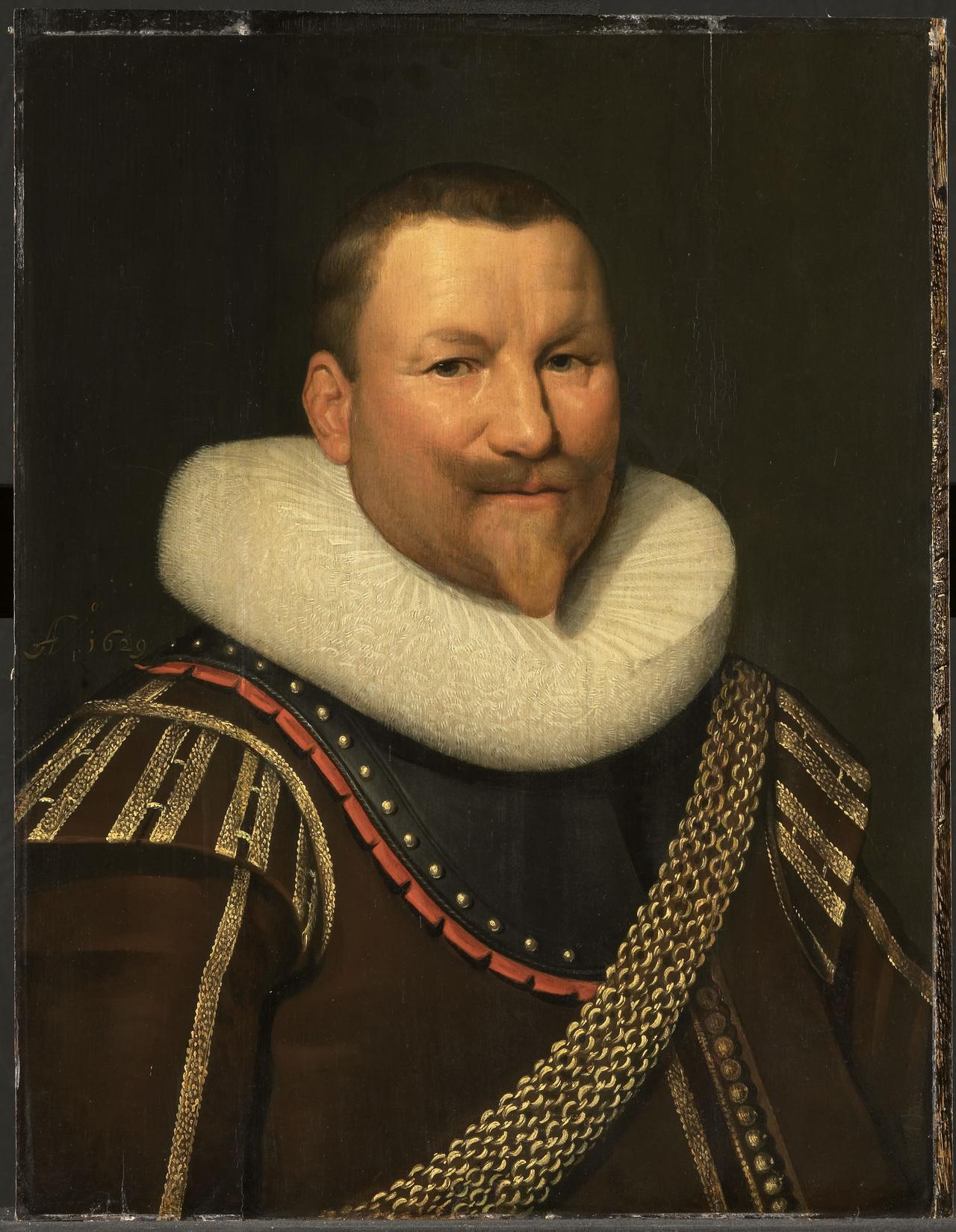
Piet Hein
The statue on this square is made of sandstone, because bronze was too expensive for the poor municipality of Delfshaven. The sculptor chose the moment when Piet Hein, a famed Dutch admiral and privateer, gives the order to attack the Dunkirk raiders, and that is exactly the fight in which he would be killed.
He was born nearby in 1577, in the street that now carries his name, the son of a skipper. In 1598 father and son fell into Spanish captivity, and Hein spent years as an oarsman on a galley. In 1603 he was captured again and held until 1607 in a fort on Cuba.
Twenty years later he returned to that same coast. In 1628, in the Bay of Matanzas, he seized the entire Spanish silver fleet, a haul of a hundred and seventy-seven thousand pounds of silver. That victory inspired the song every Dutch child knows, written in 1844: his name is small, but his deeds are great.
With his share he bought a house in Delft, planning to grow old in peace. Two months later he set sail again, and on 18 June 1629 a cannonball struck him near Dungeness, off the English coast. He lies buried in the Old Church of Delft.
The statue, by the way, has only stood here since 1963, moved to make room for a harbour expansion.
We walk north along the Achterhaven back to the Aelbrechtskolk, where the town hall of a municipality that no longer exists still stands.
Any feedback for this story?