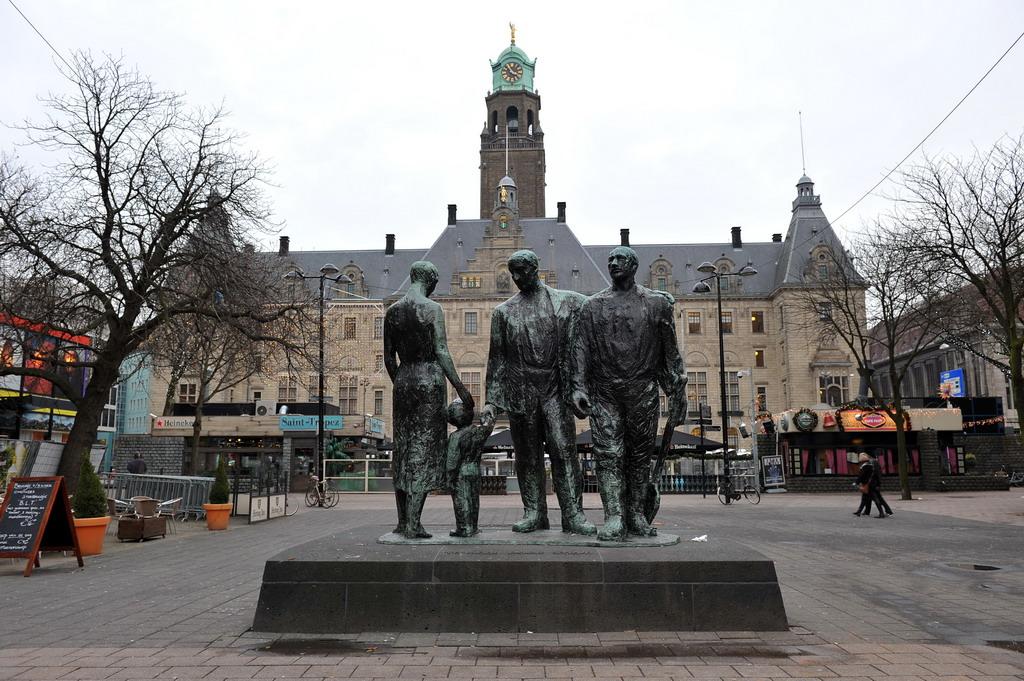
Stadhuisplein
This square sits on top of a neighbourhood that was wiped off the map long before any bombs fell. The Zandstraatbuurt once stood here, a densely packed working-class quarter with a rowdy reputation, where bars, music and prostitution jostled for space in its narrow streets. When Rotterdam outgrew itself in the early twentieth century and the old town hall on the Hoogstraat became too small, the city picked this spot for its new stadhuis, its city hall. The neighbourhood was torn down and its residents scattered across the city.
Queen Wilhelmina laid the first stone in 1915. The architect Henri Evers designed a building eighty-six by a hundred and six metres in the beaux-arts style, with Byzantine and Romanesque touches, and topped it with a tower seventy-one metres high. Right at the very top stands a gilded angel of peace by the sculptor Johan Keller, still rising above the rooftops as you look up from the square.
It was finished in 1920, and twenty years later it survived the fourteen minutes of bombing that erased the rest of the centre. It has been a national monument since 1997.
The square in front of it took on a completely different life afterwards. By day the demonstrations gather here, and by evening the terraces and the nightlife crowd move in, so the government of the city and its nightlife are forever looking each other straight in the eye.
Any feedback for this story?