Who Was Allowed to Vote
Across the water stands the complex where the right to vote was handed out, slowly, over three quarters of a century, to one group at a time.
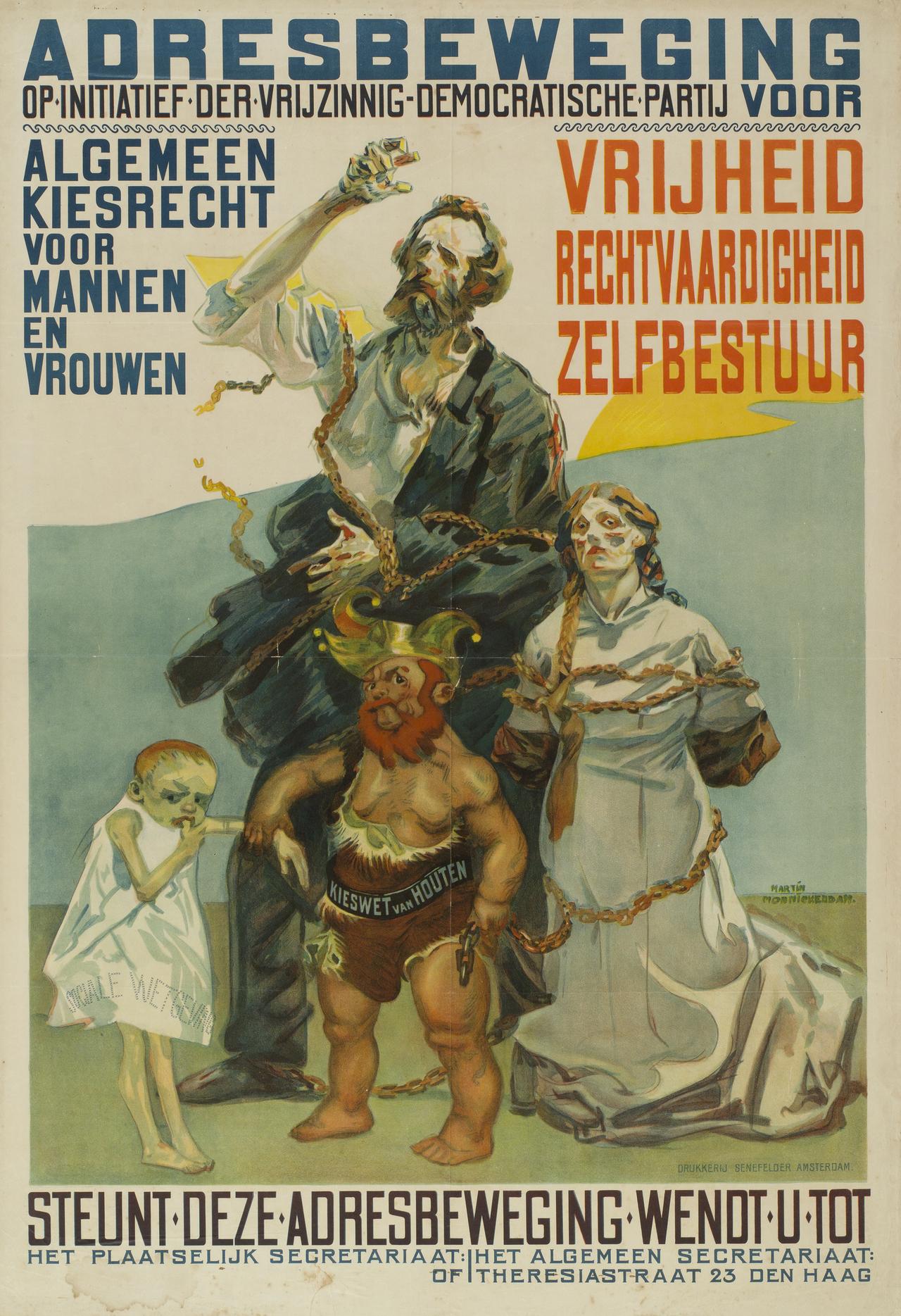
The constitution of 1848 gave real power to parliament. It also decided who got to choose that parliament, and the answer was: men who paid a certain amount in tax. Roughly one adult man in ten qualified. Everyone else, which is to say almost everybody, had opinions and no ballot.
From there the tax threshold was lowered step by step, each time after a long fight, and each time admitting another layer of the country. The revision of 1887 widened the franchise again to men who showed what the text called signs of prosperity and ability. In 1917 the remaining conditions for men fell away. Two years later women won the right as well, and first used it in the election of 1922.
That makes universal suffrage a little over a century old here, younger than most of the buildings around this pond.
What the Dutch built in those seventy years is a parliament that nobody can dominate and a habit of settling things by compromise, because the alternative is settling nothing at all.
The next stop is the small tower on the far bank, a few steps to the west.
Any feedback for this story?