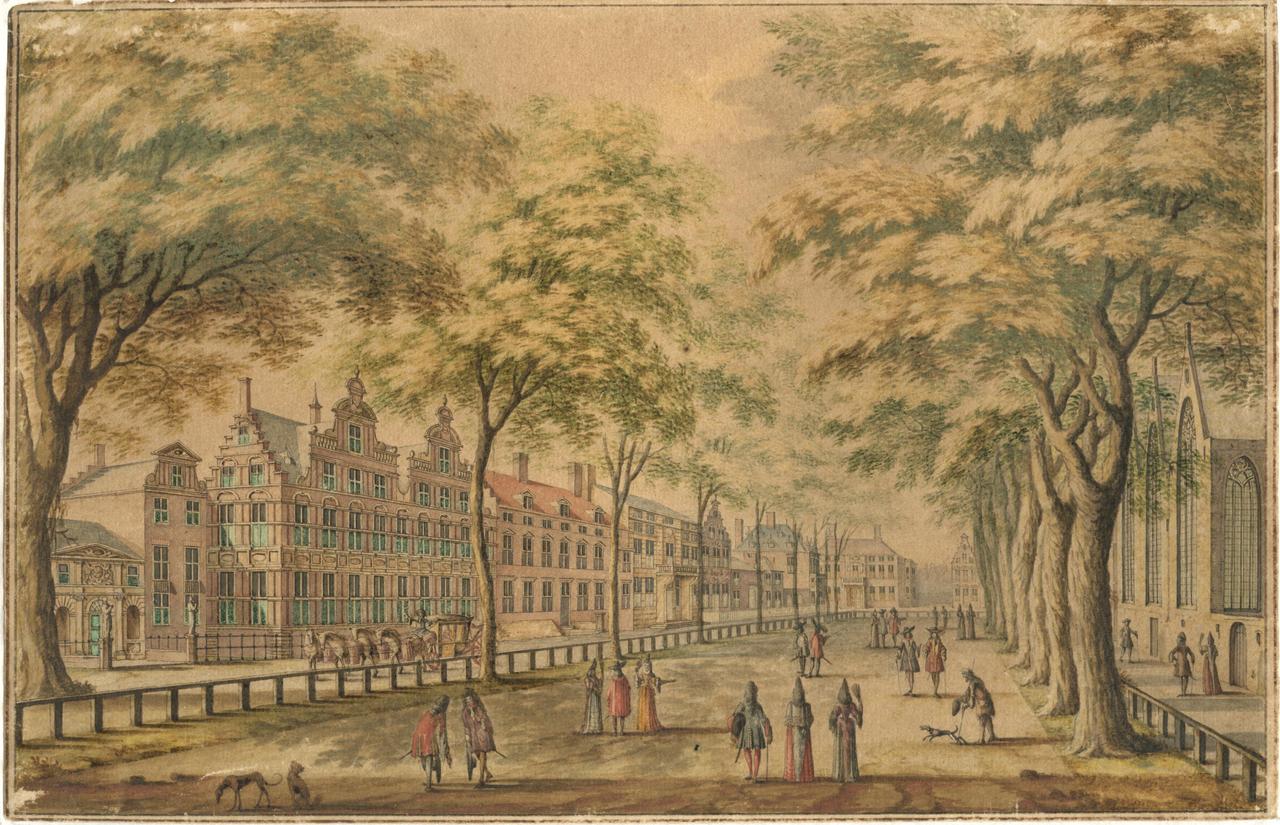
Lange Voorhout
It crunches underfoot. The central path is laid in shell sand, originally there to keep carriages from sinking into the mud whenever it rained.
In 1536 Emperor Charles the Fifth ordered four rows of lime trees planted here, after which locals began calling the avenue the Lange Lindelaan, the long lime lane. A Dutch tongue twister about Liesje teaching Lotje to walk still carries the name. The trees have been replaced again and again since then, so the limes above you are much younger than the idea behind them.
Towards the end of the sixteenth century Prince Maurits proposed turning the Voorhout into a canal. The plan came to nothing, most likely because the avenue sits on a ridge of sand.
These days there is engineering under that sand. During the 2009 overhaul the ground was opened up to a depth of three metres for a structure that protects the tree roots, and concrete slabs were laid to carry the works of the annual sculpture exhibition.
Then there is number 32A, a hundred and eighty-three centimetres wide, wedged in among the embassies, hotels and mansions that set the tone here.
The next stop lies at the western end of the avenue: Noordeinde Palace.
Any feedback for this story?