Spinoza's Empty Grave
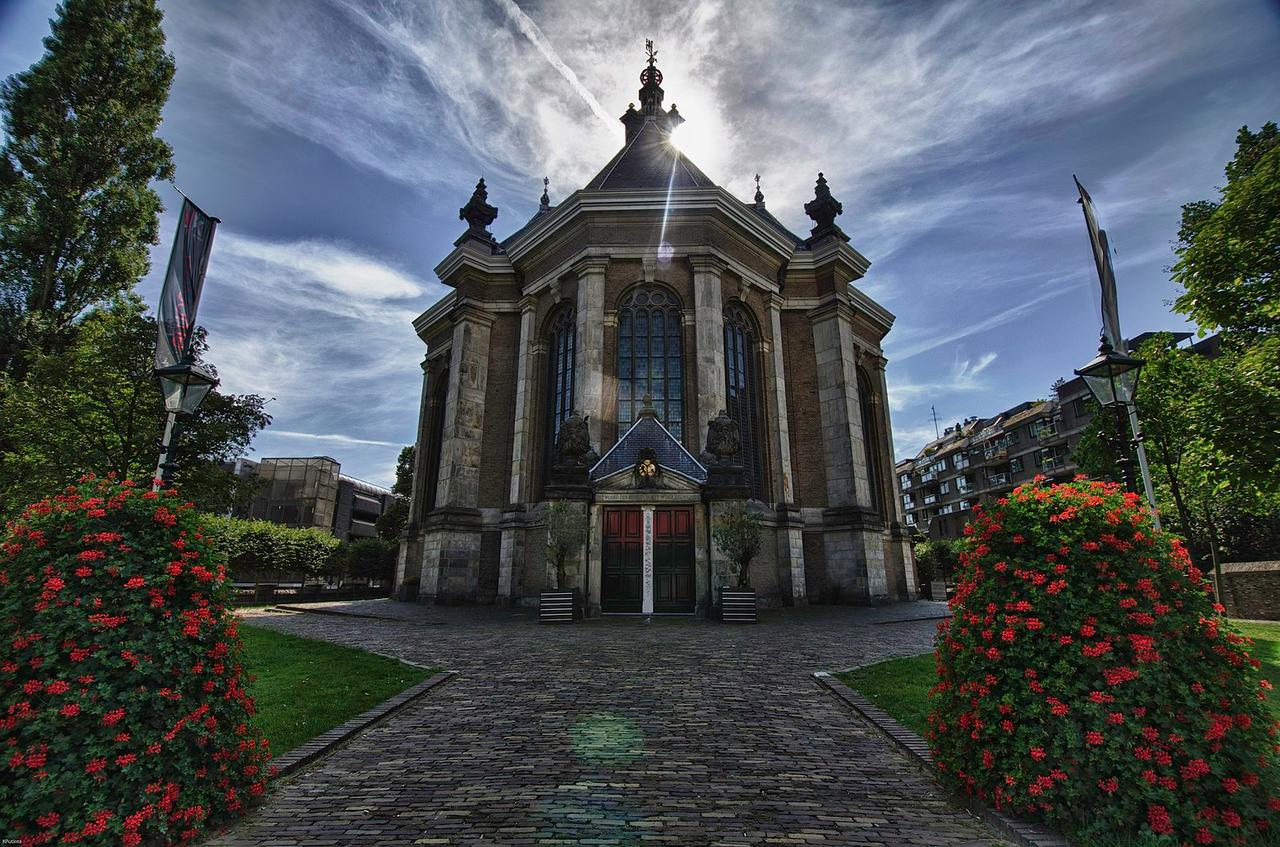
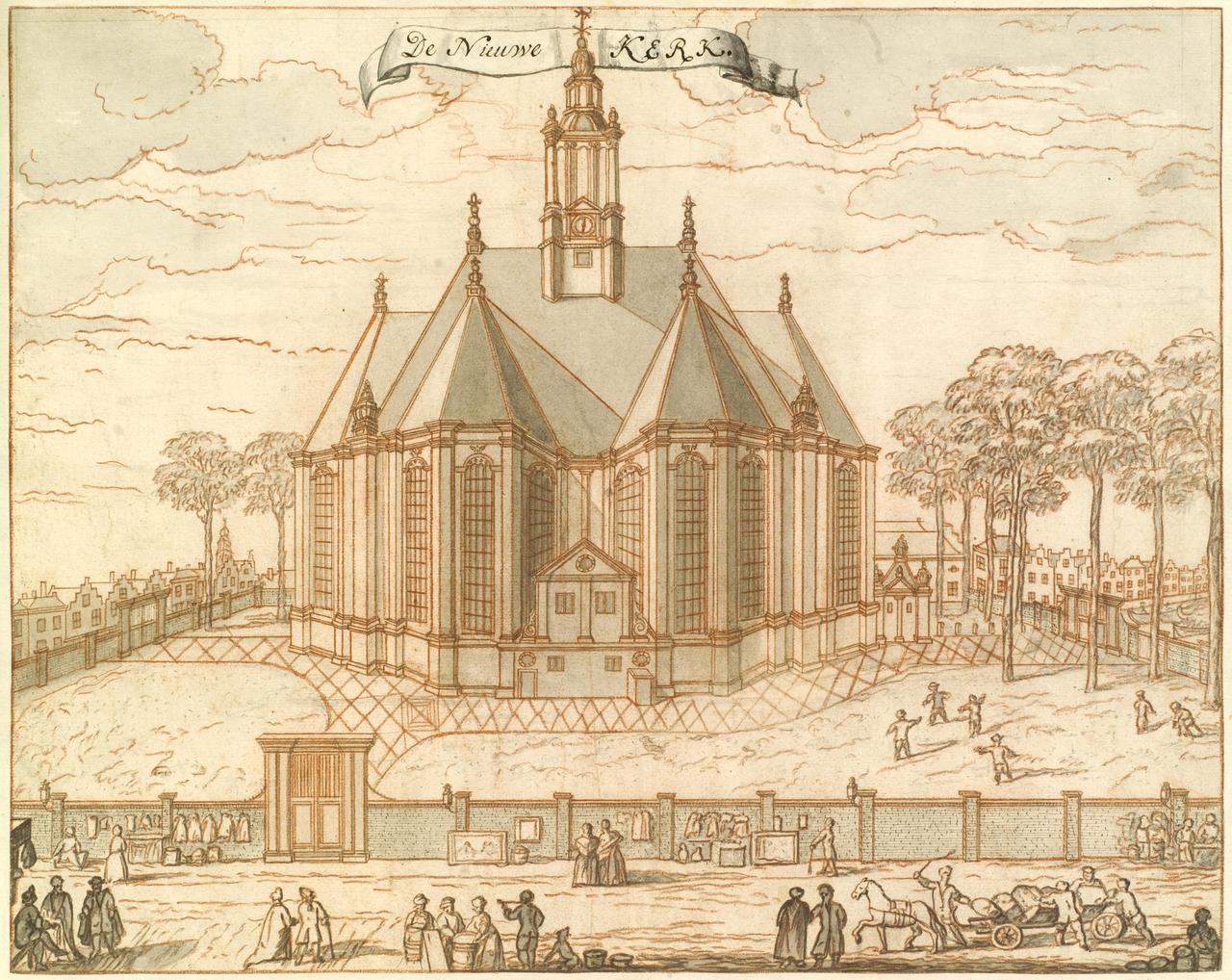
The Nieuwe Kerk was built between 1649 and 1656, the first church in the city designed from the drawing board as a Protestant one. It gained its most famous grave in February 1677, when Benedictus de Spinoza was buried here, close to Jan de Witt. Six carriages and a long line of notables brought him from his room on the Paviljoensgracht to the Spui.
The grave was rented. In 1738 the lease ran out, the grave was cleared, and his bones were probably scattered through the soil of the churchyard. Anyone standing here is looking at a spot that nobody can pinpoint any more.
Two hundred and fifty years after his death, something finally appeared. In 1927 a flat stone was laid behind the church, carrying his seal and the word caute, be careful. Almost three decades later a private citizen from Rijswijk added a standing monument, with a block of black basalt from the mountains of Galilee and on it the Hebrew word amcha, your people.
The unveiling was meant to mark three hundred years since the ban that expelled him from the Amsterdam Jewish community. Around a hundred and twenty-five people came, among them the Israeli ambassador and a government delegation. Nobody came from the Dutch Jewish community.
The next stop stands directly to the north of here: the white city hall on the Spui.
Any feedback for this story?