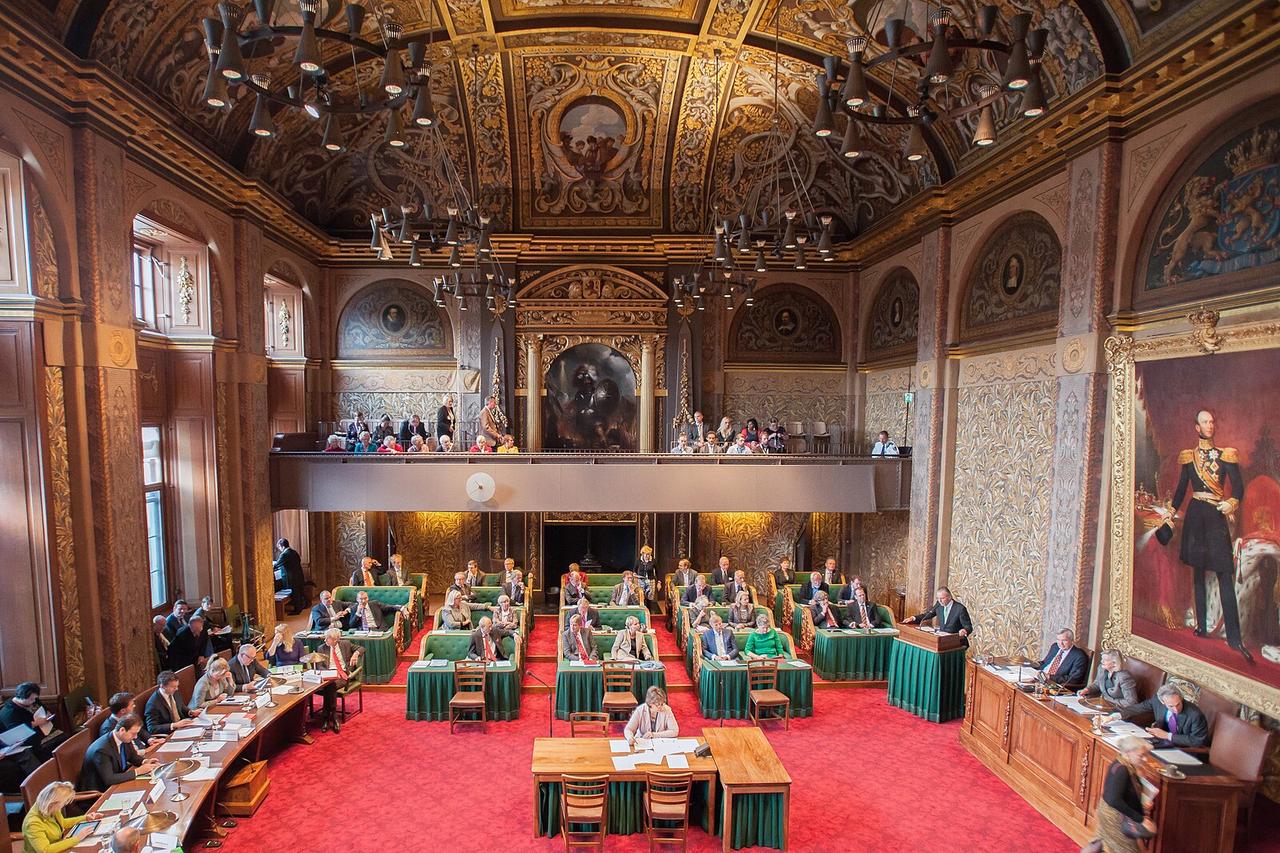
The Eerste Kamer
This is where the Senate sits while the Binnenhof is being rebuilt, and it is the chamber most Dutch voters have never knowingly voted for.
Its name translates as First Chamber, which has been misleading since the day it opened. It came into being in 1815, during the short-lived union with what is now Belgium, as a concession to the southern nobility who wanted a chamber of their own. Belgium left in 1830. The chamber stayed.
Seventy five senators sit here, and nobody elects them directly. They are chosen by the members of the twelve provincial councils, which means the vote you cast in a provincial election travels one step further than most people realise and ends up here.
Their power is blunt and absolute. They read what the House of Representatives has passed and they say yes or no. Changing a comma is beyond them, so a flawed bill either goes through as it is or dies entirely.
Critics call that too much influence for a body nobody picked by name. Defenders call it the last safety catch. Both arguments have been running for two centuries, which is roughly how long the chamber has outlived the country it was invented for.
The next stop lies on the edge of the Binnenhof, about seven minutes to the south.
Any feedback for this story?