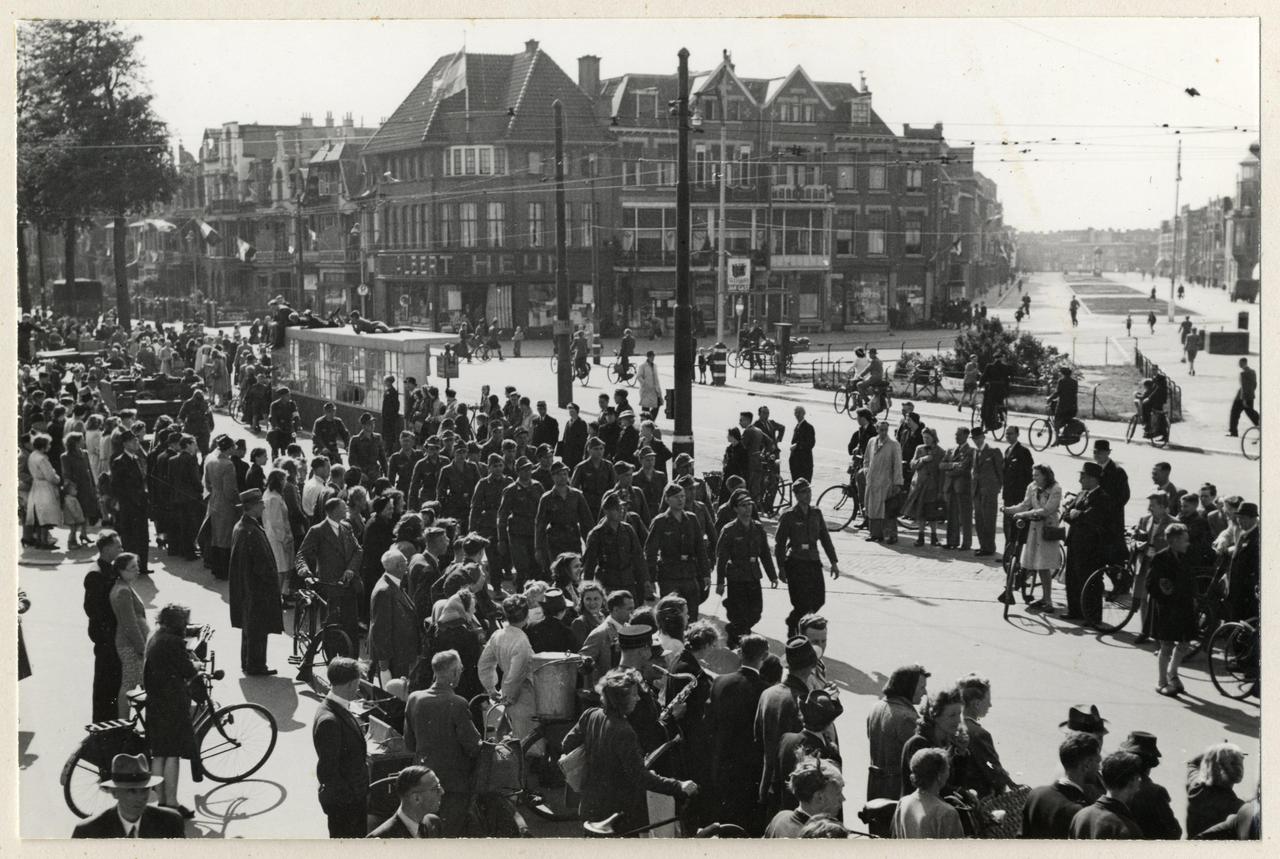
The Hague during the Second World War
The Hague entered the occupation as a city of diplomacy and came out of it five years later as a city with holes in it.
Mayor Salomon de Monchy refused to do as the occupier asked and lost his office in September 1940. His replacement was Harmen Westra of the Dutch national socialist party, and with him came a city government of collaboration and repression.
The city counted around 17,000 Jewish residents, the largest community in the country after Amsterdam. They lived all over town, around the Nieuwe Kerk and in Scheveningen. The transports began in 1942. Most of them never came back, and that absence still hangs in the streets.
The city itself disappeared piece by piece at the same time. Whole neighbourhoods were flattened for the Atlantikwall, and some 135,000 people were ordered out of their homes.
The winter of 1944 into 1945 went into the books as the Hunger Winter. Cold and lack of food cost more than 2,100 residents their lives. In the middle of that winter, on 3 March, British bombers went looking for the German V2 sites in the Haagse Bos and hit the Bezuidenhout district instead. Over 550 people died, thousands were injured and much of the neighbourhood was flattened.
On 8 May 1945 the city was free.
The war sits closer to the surface here than you would expect. Walk one of our tours and you will run into it.
Any feedback for this story?