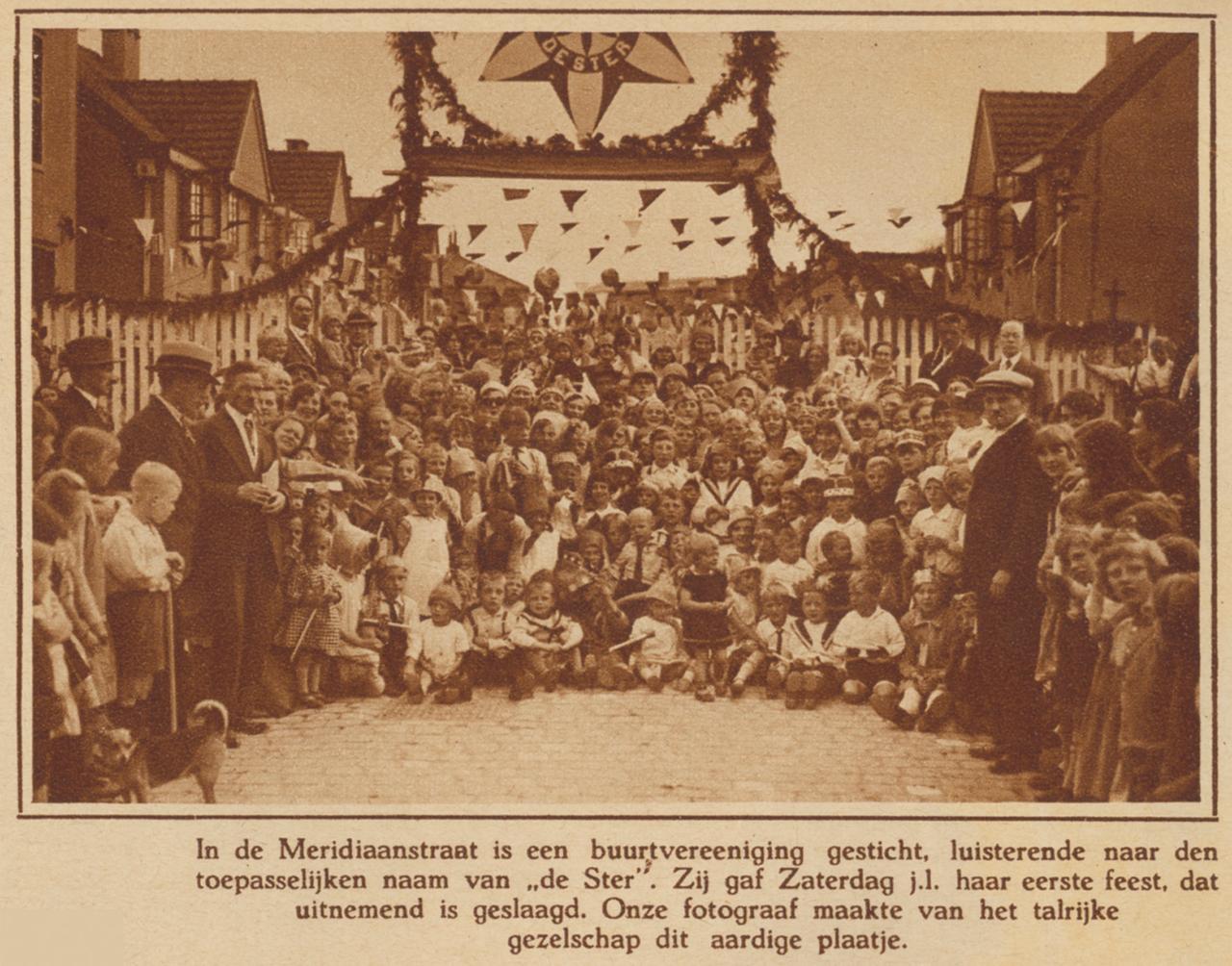
Sterrenwijk
Sterrenwijk was meant to be temporary. From 1918 onwards, 375 white houses went up here, thrown together at speed by unskilled workers using lightweight materials. Their calculated lifespan was twenty-five years. After that they were supposed to disappear.
They stood for almost sixty. The housing shortage after the war made demolition impossible, and large families moved into the roomy, cheap houses. What grew was a neighbourhood that called itself 't wijk, with a reputation that sounded harsher outside its streets than within them.
The white houses finally came down in 1976. What followed was unusual for the time. Residents did not have to leave: demolition and rebuilding ran in four phases so that everyone could stay put. Every Thursday evening the city architect sat down with residents to hear what the new neighbourhood should look like. The clustered courtyards you see here came out of those meetings, and the approach was held up as an example across the country.
With just over eight hundred residents this is still one of the smallest neighbourhoods in Utrecht. The white houses are gone, the name the residents gave the place is not.
Utrecht is full of neighbourhoods with a history of their own. One of our walking routes will show you more of them.
Any feedback for this story?