The Dutch Railways in Wartime
The head office of the Dutch Railways stands in Utrecht, on the Moreelsepark. The memorial to the railway staff who died during the occupation stands there too.
From those years the company carries two histories. The first is its part in the deportations. Trains took Jewish prisoners and Sinti and Roma to Westerbork and Vught and on to the eastern border, the timetable was adjusted to fit, and the company sent an invoice for every journey. In 2019 it set up a scheme paying compensation to survivors and surviving relatives.
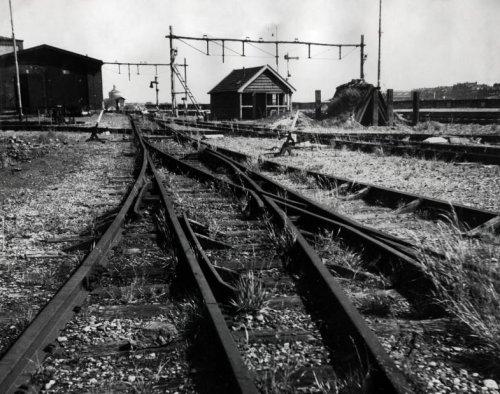
The second begins on 17 September 1944. At the request of the Dutch government in London the railway staff stopped work and tens of thousands of them went into hiding. The trains stood still until the liberation. The occupier answered with a transport ban that cut off food supplies to the west, and that winter became the hunger winter.
The same company, the same years, and a memorial that names only its own dead. For a long time that was the only remembrance here set in stone.
Did you find this interesting and want to hear more? Pick one of our walking routes!
Any feedback for this story?