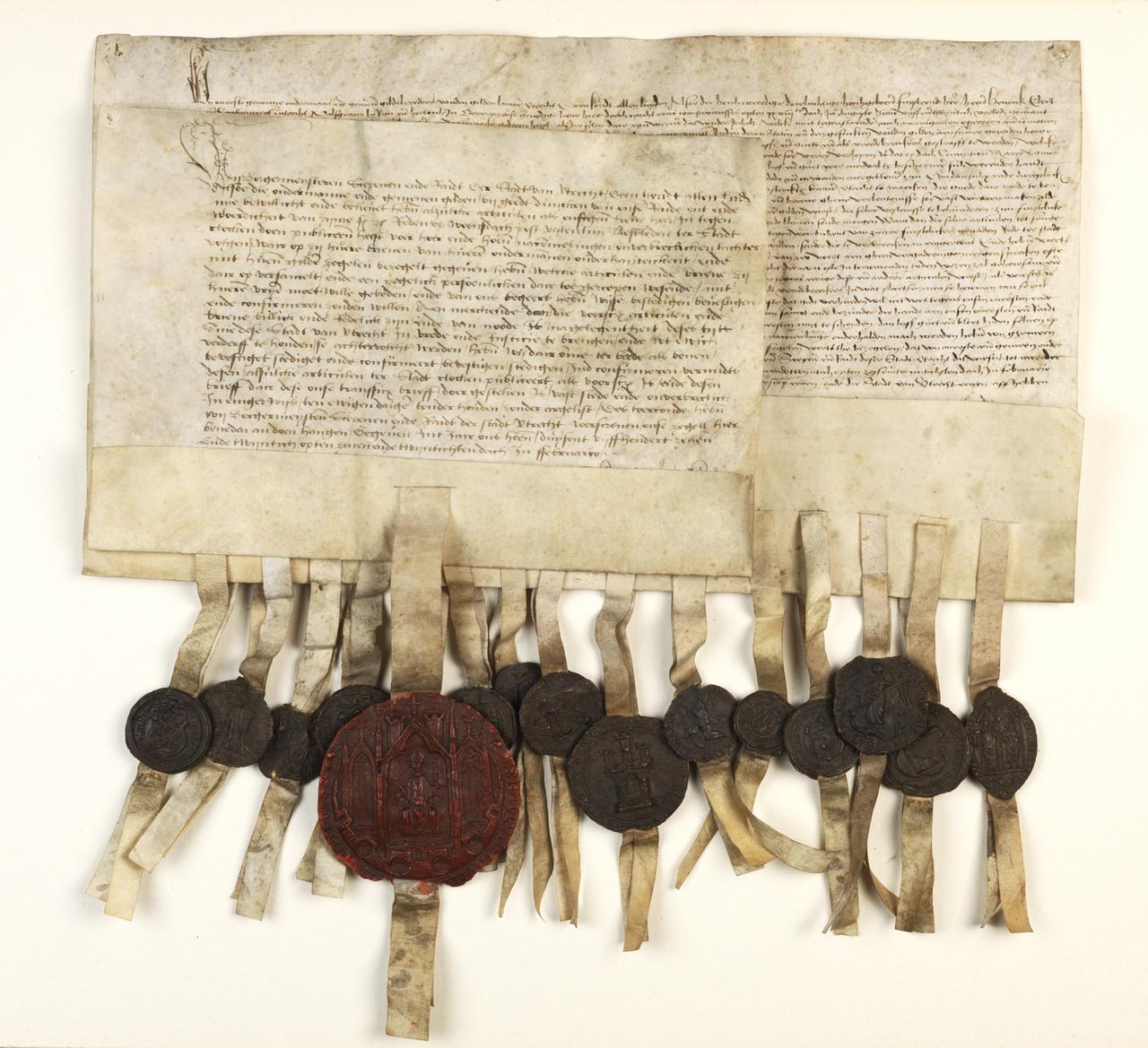
The Guilds of Utrecht
For centuries this city was governed by bakers, shoemakers and smiths.
In the Middle Ages anyone practising a trade had to belong to a guild, and without that membership you were not allowed to work in Utrecht at all. By the middle of the fourteenth century there were twenty-one of them, from tanners to sack carriers, and among themselves they settled working hours, prices, quality and the training of apprentices.
They did more than their trade. During a revolt in the thirteenth century the guilds took power from the wealthy merchants and the town nobility, who were so divided among themselves that they asked the craftsmen for help and handed over their own position in the process. From that moment the workshop floor sat in the city government.
That lasted well over two centuries. In the twenties of the sixteenth century nobles and canons stepped in, and when the guilds held their ground the bishop threatened to build a fortress to force their obedience. He then called in the help of emperor Charles the Fifth, who went further than anyone expected and claimed the government of the entire city.
We now walk to the Vredenburg, because that threatened fortress was actually built.
Any feedback for this story?