The clock everyone passes by
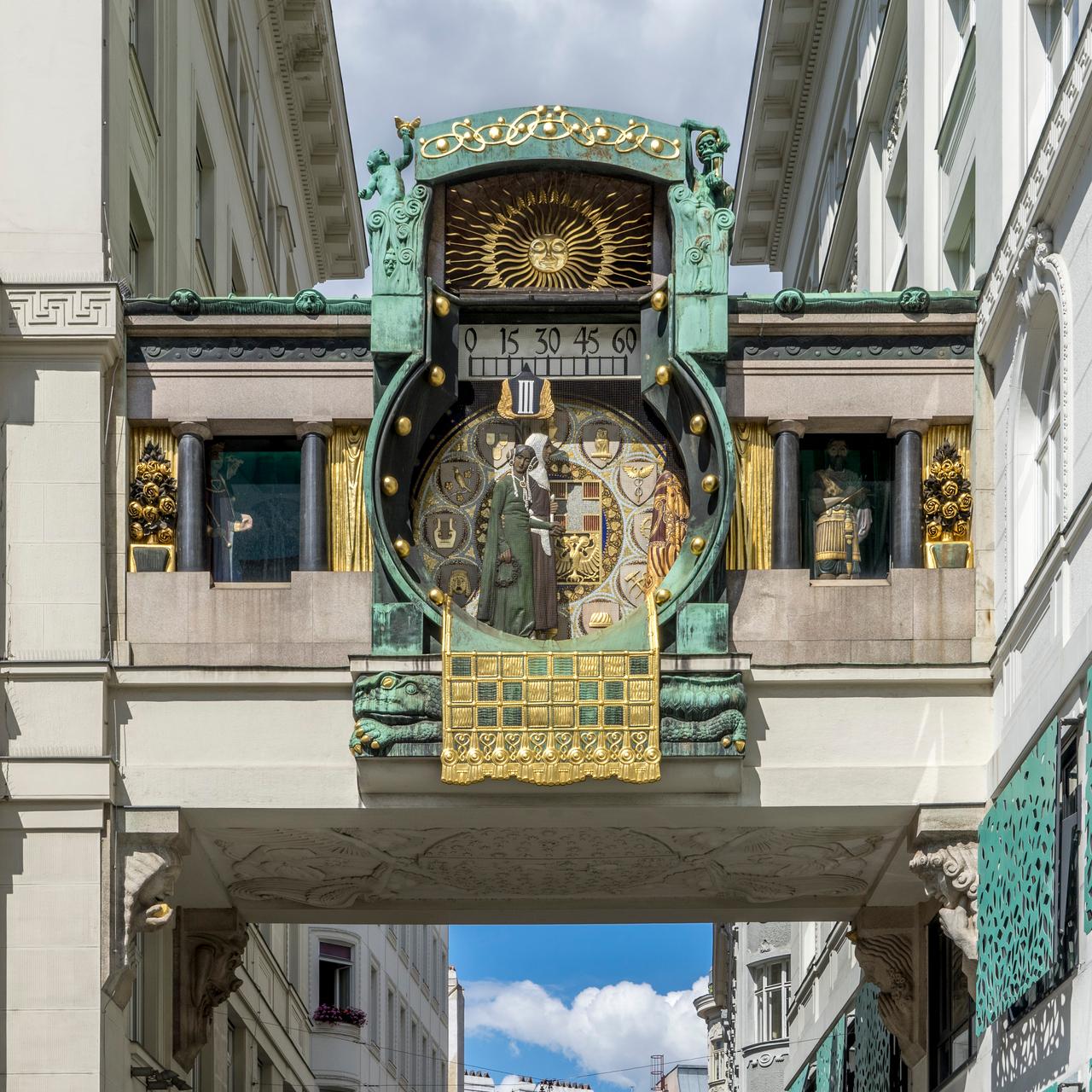
Look up at the bridge that spans the two buildings, because hanging there is a clock that holds the whole city.
The Ankeruhr was built just before the First World War by an insurance company, and every hour a figure from Vienna's past glides by, in chronological order. At noon all twelve of them appear one after another, with music to go with them.
Two of them you already know by now. At number eight comes mayor Johann Andreas von Liebenberg, to the tune of the song about the drunken bagpiper who survived the plague pit, and right behind him passes Count Ernst Rüdiger von Starhemberg, to a battle march. The man who governed the city and the man who defended it, day after day, in that order.
This square is the oldest open space in Vienna. Beneath it lie the remains of the Roman army camp where the watch was already being kept when the city was called Vindobona, and across the street you can go down into that excavation.
With that the circle closes. The city held firm, then rebuilt itself in baroque splendour, and turned those two months when everything hung by a thread into a string of stories about bakers, coffee and a bagpiper.
From here we walk back through the Rotgasse and the Lichtensteg, a few minutes to the Stephansdom, Vienna's great cathedral, where you began.
Any feedback for this story?