The boulevard that never came
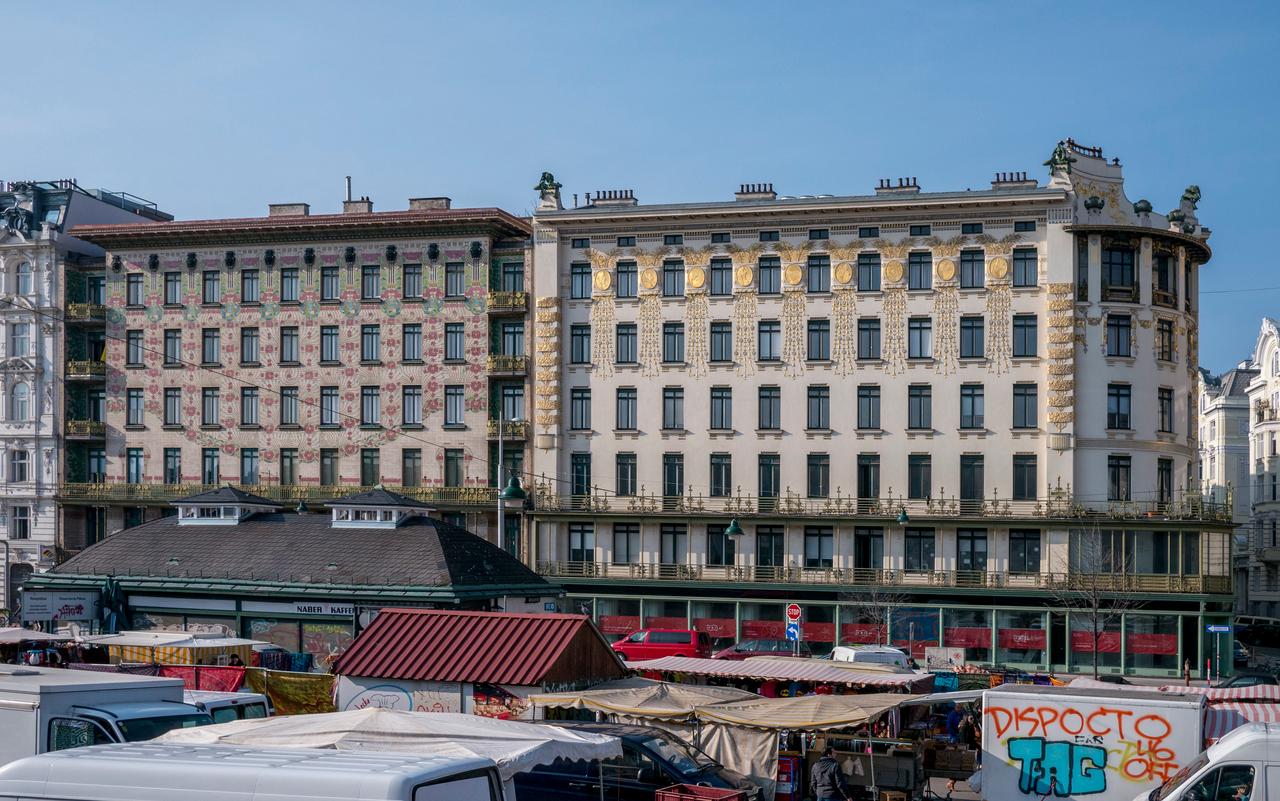
These two houses are all that ever came of a plan meant to transform an entire city. Otto Wagner wanted to turn the embankment along the Wien river into a grand avenue running from the centre all the way to Schönbrunn, the imperial palace on the edge of Vienna. The city council agreed to it in 1894, and then nothing more of that avenue ever took shape beyond this stretch.
The house on the left is covered entirely in glazed tiles, with rose vines climbing up across five floors. Wagner chose tiles for their colour, but also for a practical reason, because a ceramic facade can simply be hosed clean, and in a city full of coal smoke that counted for something.
The corner house beside it carries golden medallions by Koloman Moser, and on the roof stand bronze female figures with raised arms, calling out over the street. The neighbourhood wasn't impressed. Critics wrote that Wagner had papered over the Wienzeile, and one newspaper said the facade would suit a bathhouse.
Around the corner, in the third house of this same block, the architect kept an apartment for himself.
Any feedback for this story?