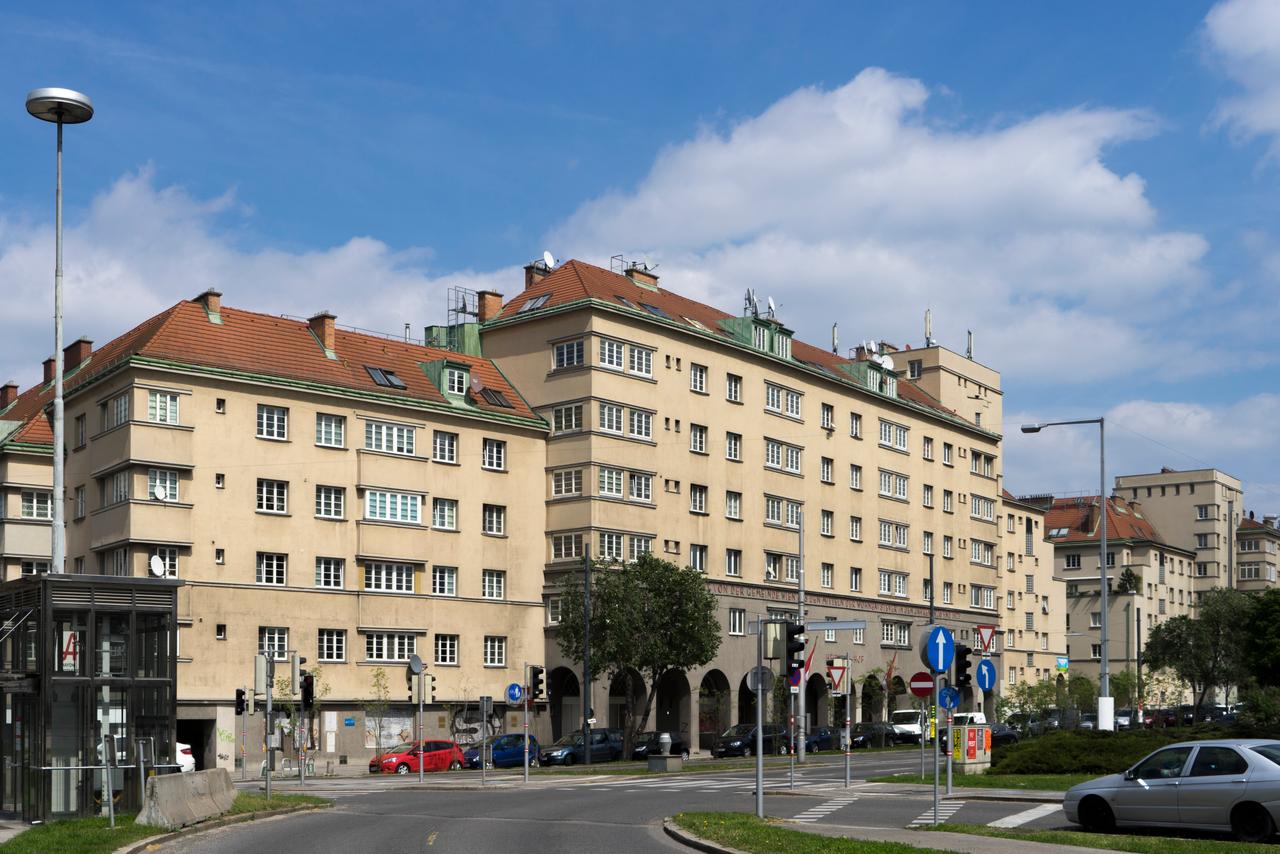
The Poet on the Facade
This block carries the name of Georg Herwegh, a nineteenth century German poet who became famous for a fighting song in which he wrote that every wheel grinds to a halt the moment the strong arm wills it. When a city council names a housing block after that line, it's saying something to its own residents and to the factory bosses just down the road.
For the builders, that symbolism sat on top of something more practical, because these blocks followed a firm rule: at most a third of the plot was ever built on, and the rest became courtyard, so every home got daylight and the inner space belonged to the residents together rather than to no one.
The homes themselves were small by our standards, with a kitchen that doubled as the living room, but they had gas, electric light, their own tap and their own toilet, and for a working family that was a leap of a century in a single move.
The facades were kept deliberately plain, with the money going into the plumbing and the courtyards rather than into ornament.
One block further on stands a courtyard that shows just how touchy these names could be.
Any feedback for this story?