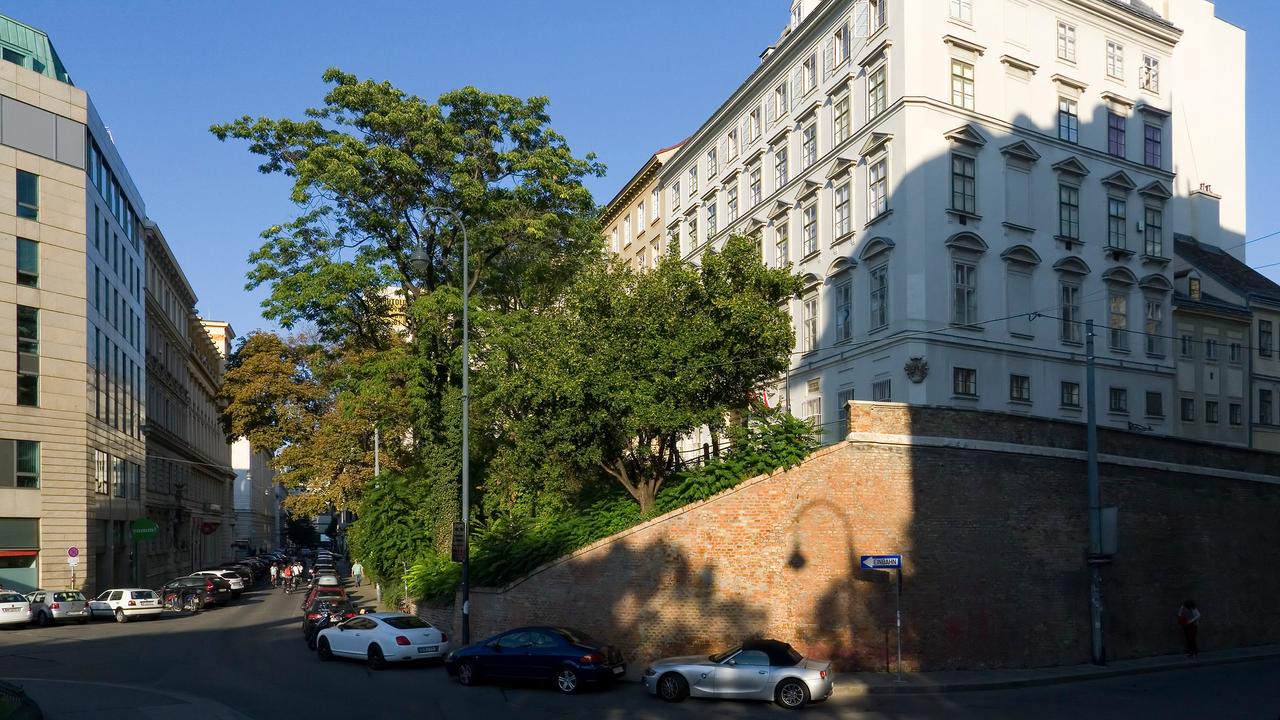
The last stretch of wall
This raised terrace with houses on top is just about all that remains of the fortress of Vienna.
A bastion wasn't a wall but a point that jutted outward, so the defenders could fire along their own wall from the flanks and anyone climbing over it caught fire from two sides. So the Ottomans went underneath. They dug their way toward the rampart, planted mines beneath the bastions, blew them up, and the defenders stuffed the gap shut again with beams, earth and rubble. Two months of this, over a few dozen metres of ground.
At the edge of the bastion stands a monument to Johann Andreas von Liebenberg, the mayor who steered the city through the siege and died in its final days, just before relief arrived.
The worst of the fighting, by the way, happened a few hundred metres further on, at the bastions where the Hofburg imperial palace and the Volksgarten park now lie, and nothing of that has survived. From 1858 onward, Emperor Franz Joseph had the entire ring of fortifications torn down for his new boulevard, and this bastion stayed standing simply because there were houses on it.
Ludwig van Beethoven lived in one of them, with a view over the field where the trenches had been. He moved so often within Vienna that his landlord just kept the rooms here for whenever he came back.
Below the bastion runs the Ring, laid out on the field that had to stay empty for two centuries.
Any feedback for this story?