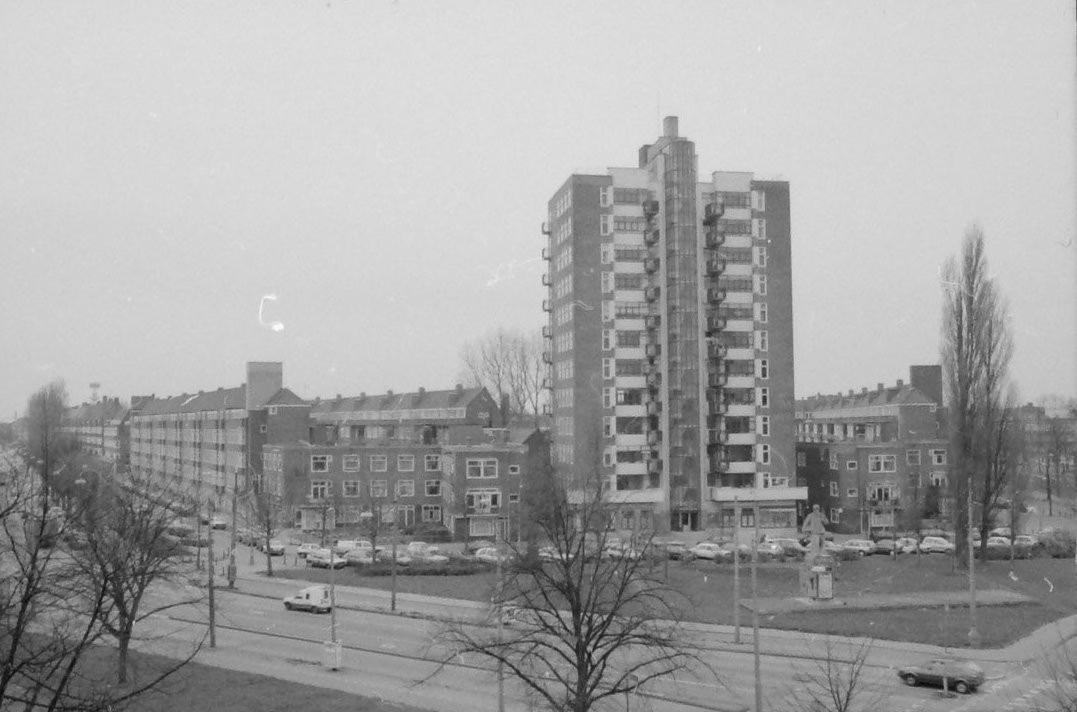
Het Victorieplein
Twelve storeys high, this is the building that locals were already calling De Wolkenkrabber, the skyscraper, before it was even finished, at a time when that word was barely used in the Netherlands. The architect Jan Frederik Staal built it between 1930 and 1932, and it became Amsterdam's first high-rise housing project. Until then the city had stuck to four or five storeys, so the building code had to make an exception. The bronze letters at the entrance still announce that this is the twelve-storey house.
Until after the war, the square below was called the Daniel Willinkplein. Anne passed through here every day, because this was the crossroads where the Rivierenbuurt came together, with the tram, the shops and the view of that tower at the end of the street.
Behind the statue of Berlage, the urban planner who laid out this whole district on paper, the building rises just as it did in her day. Take a moment to look at the houses around it. Dozens of Jewish families lived at these addresses, and on the Joods Monument, Amsterdam's memorial to its murdered Jewish residents, they are now listed floor by floor by name, with the years of their deaths beside them.
We cross the square heading east and walk back towards the Merwedeplein, until we are standing on the lawn in front of the houses.
Any feedback for this story?